The Field Day is a great opportunity to see the farm in action and meet the Tierra Verde team. Spend time walking the fields seeing and learning how we farm…hear from the Tierra Verde staff and owners why we farm. Highlights of the day will include:
On-the-ground station overviews of each of our key animals – layers, broilers, cattle, lambs, and hogs.
An overview of the foundations shaping the way we steward our land and animals by Steve Montgomery.
Cookout featuring Tierra Verde Farms hot dogs and hamburgers
The event is open from 2 PM to 6 PM with station presentations and talks done on a rolling basis. If planning to visit the animal stations, please wear suitable footwear and clothing for what could be a wet and muddy walk.
Let us know you’re coming by emailing us at info@tierraverdefarms.com.
I’m certainly no fan of Vladimir Lenin, but I love one of his quotes: “There are decades where nothing happens, and then there are weeks where decades happen.” Change in our world is not smooth and linear. It comes in bursts and spurts. Recognizing when we are in one of those periods and responding accordingly is important. I think about this quote often when looking at today’s interesting and rapidly shifting world of beef.
A complex series of events – COVID labor shortages, drought, higher prices of equipment, etc. – has caused the supply of cattle in the US to drop to its lowest levels since 1951…75 years ago! The population of the US in 1951 was 150 million. Today it is 350 million.
Also, the number of breeder cows in the US (those who give birth to the animals that become our beef in 2-3 years) has shrunk by 13%(!) since 2019. With the high prices of cattle and interest rates, many ranchers are reluctant to rebuild their herds, opting to sell beef for slaughter at high prices today. This tightening of supply has been the primary driver (along with lower imports) of the high prices we’re seeing.
Beef demand continues to grow very strongly. Despite these record high prices for beef, demand grew 7-8% last year and is expected to continue to outpace the growth of other meats like chicken and pork. We are definitely seeing signs of this at Tierra Verde.
When supply increases or demand decreases, prices go down. Neither one of these circumstances appear to be likely anytime soon in the world of beef.
You may ask, “You’re raising your own calves, so does this really affect you?”. Yes, in two specific ways.
First, most farms like ours have a few trading partners – farms that share the same practices/protocols and can be mutually helpful to keep supply consistent. On occasion, we will buy finished steers from specific farmers we know and trust deeply. We will also sell animals. This week we sold 10 live finished hogs to another farmer who is running short on pork. It was always relatively easy to do this with beef. There was a small but stable supply available at the quality level we demand, a standard that really cuts down our possible supply. The price, while higher than we liked, was digestible. Now, we don’t have the same level of known supply, and the prices are significantly higher.
Second, there seems to be squeezing of price differences between large-scale operations beef and products like ours. As large-scale prices increase, we are seeing more and more people who would rather pay a little bit more to get the quality of what we’re providing. That creates (wonderful) additional demand pressures on us to serve you.
In the midst of all of these factors, we looked at options to make sure we grow the highest quality beef possible, meet growing demand, and protect our ability to produce from outside market factors. It became crystal clear that we needed to grow the size of our beloved herd of breeding cows.
At the end of 2025, we took the big step of moving our mama cows and their calves a bit south of Canton, near Gnadenhutten. Some great friends with Green Hills Grazing have 3,000+ acres of available grasslands for them to live on, taking significant pressure off of the land in Deerfield. Given the extra rest, we’re amazed at how incredibly lush the grass is this year compared to last year with fewer animals on the land. We are really pleased with the growth we’re seeing on them. This shift has also been a game changer to help us get some breathing room on the TVF acreage and grow our capacity. Now, the TVF pastures will be used to improve our grass finishing processes so we can more closely monitor the cattle as they are drawing close to processing.
In April we became aware of a herd of 22 pure Devon bred (pregnant) cows that were possibly going up for sale. A farmer in the southern tier of New York was looking to downsize his overall farming operation. Instead of selling them off piecemeal, we would be interested in taking the whole herd, so we thought this might be a chance to get some great Devons in a win/win deal.
Steve and his wife Mel took a trip to see these ladies in April. They looked really good, and some were already starting to have calves. After some negotiation we committed to purchase them and started planning the logistics to get them back to Ohio. I’ve worked with Steve for a while and have yet to see him really nervous about anything. He was nervous about this move, though. There were some real logistical challenges with this move, mostly before getting them on the truck.
The first problem was that the farmer had all of these animals all mixed in with a few dozen other head of cattle that were in a large field. Separating these animals and their calves, and then guiding them into a corral was going to be no small feat. He committed to getting this done before we arrived, but it was still a relief to see that he had done it. There remained a couple challenges, though…there were two additional calves in the corral that were not offspring of the Devons! We played matchmaker by getting up early the next morning and observing which calves were not matched up, and seeing which cows in the field were calling at their baby in the corral. We then had to tag and record the 12 remaining calves to their mothers.
Second, we had to figure out how to mix in calves and cows on the trailer. At Tierra Verde, we breed our calves in a precise manner. Each year in mid-July, the bull is let in with the cows for two months (cows are fertile on a 3-week cycle, so this allows for some margin of error). Our calves are then all born in the same window, late April through June. This farmer was not so deliberate, and we had a wide range of pregnancy dates. Some of these cows had six week-old calves, while some were weeks from giving birth. We ultimately decided that the safety of separating cows and calves in different sections in the trailer outweighed the benefit of keeping them together for the 4-1/2 hour journey.
Third, we had two ladies who had given birth in the prior day. Their calves were robust but still smaller than the others. One thing to note is that newborn calves just lay around for the first couple days. They aren’t looking to stand on a trailer for hours like the rest of their herd mates. Thankfully, we have a small compartment in our livestock trailer that suited these little fellows well. We also were concerned about cows giving birth on the trailer, something that’s more common than you’d think.
We sorted things out and we were able to get the whole crew to the new pasture safe and sound. No travel births either, which was a relief.
We rolled into the Green Hills land and the reunions began! It is always such an amazing thing to see the powerful connection between mom and baby in the bovine world, especially with the young age of these calves. Seeing the fierceness that the moms have in getting their kiddos back – almost scolding them – to nursing is amazing. Interestingly, while we were in New York, Jackson, who handles our breeding cow herd, was dealing with a situation where he needed to create this linkage artificially because of some sad circumstances in our existing, currently calving herd.
One of our ladies gave birth to twins, but quickly rejected one of them. This is not uncommon. Nursing is incredibly hard and calorie-intensive on a mother, and if she believes that she can only sustain one calf, she’ll make the decision to focus on the stronger one. Bottle-feeding in this situation is not feasible. A few days later, we had a young calf who was stillborn. This presented a chance to help the overall situation with something pretty crazy.
Grafting is a process where you skin a dead calf and wrap the rejected one in the hide. Because cows link to their young by smell, there’s a good chance that the mom of the dead calf will adopt the familiar-smelling youngster. Jackson had never done this before, but Steve had. He talked Jackson through the process over the phone. That very day the mom was nursing the incognito calf. Jackson removed the hide 4 days later, and the pair has deeply bonded in the 2 weeks since. Simply amazing (see photo of the pair below). The rest of the ladies and their young have taken to the land nicely.
With this new crew of 22 landed in addition to the 50 we already had, and are now a bit closer to our target of 90 cows in the breeding herd. We’re going to continue to keep our eyes open over the coming year or so to close the gap. They say Warren Buffet started his career buying fair companies at a great price, but shifted to buying great companies at a fair price. We have been and will be aligned with the second pathway. We’ll only do so, though, when we are at a high level of certainty about the quality of animal we’re buying.
We started with some very high-level perspectives on the industry, and ended this on the ground, in the dirt. I hope this gives you some insight into how we think about our work here at Tierra Verde. We’re so grateful for the trust you put in us; we’re doing everything in our power to ensure we’re worthy of that trust.
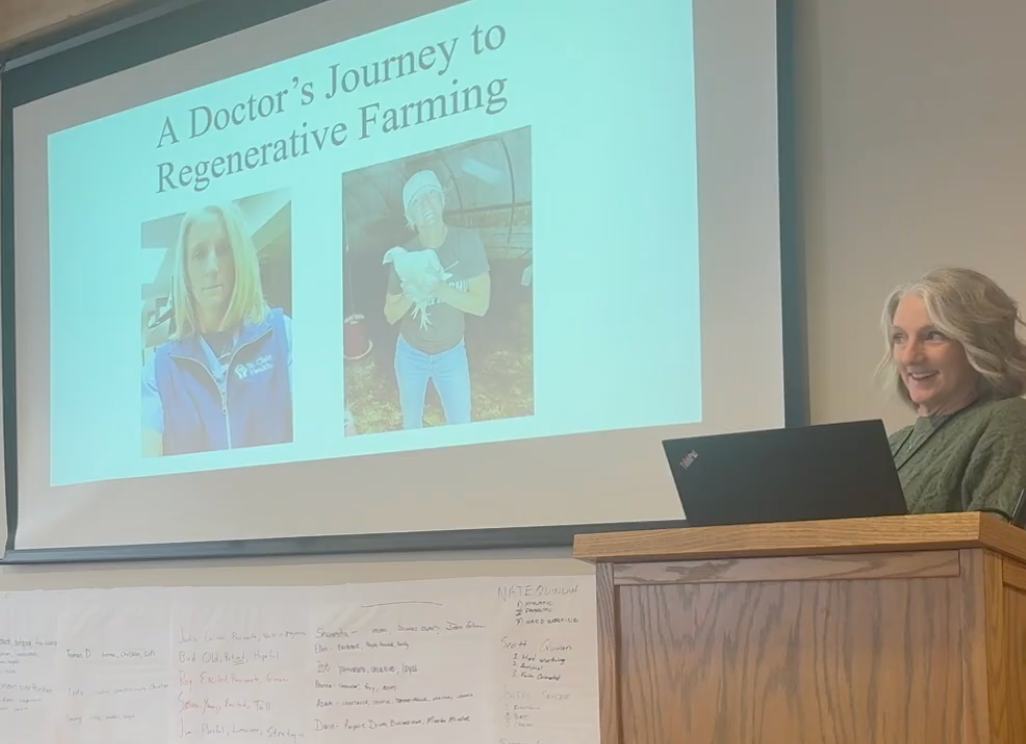
In early February 2026, Fireberry Provisions hosted a gathering of people to discuss regenerative farming, real food, and faithful stewardship of land and community. Shirley McElhattan, M.D., Tierra Verde’s business manager, had a chance to talk about her journey from practicing medicine to farming.
In this talk, she covers that journey, including her core beliefs about the practice of medicine, how those beliefs were formed, the current state of health care today, and the contrast of her prior practice to what she does now with TIerra Verde Farms.
The transcript adapted from Shirley’s talk is below the video. To watch the presentation, click on the image below.
A Doctor’s Journey to Regenerative Agriculture
Last night at the dinner, someone asked, “are you still a doctor?” And I thought about that for a minute. I was like, hmm…I have a medical degree. I matriculated from medical school. They don’t take your MD away. There are initials after my name, although I rarely use them. So that won’t change.
I’m still licensed to practice medicine in the state of Pennsylvania. I will probably continue that. That’s easy. It’s an every two-year recertification thing. It’s really just about writing a check. I am board certified by the Board of Internal Medicine, at least until I’m 60, because that’s the next time I’m supposed to take my board exam. It’s an every 10-year thing, and I’m not sure that I’m going to do that. That’s a big thing.
So, yeah, technically, I’m still a doctor, but I think what they were asking is, “do you still practice medicine?” That’s what this is about.
What I’m going to talk about today is my core beliefs about the practice of medicine, how those beliefs were formed, the current state of health today, and why I think that is. What did my medical practice look like when I was practicing conventional medicine? The difficulties I faced in that practice. Why regenerative agriculture would make sense to someone who’s practicing medicine, and then what my medical practice looks like now.
“It’s hard to improve on the natural order of things.” This is my core belief that I have about everything, really, including medical practice. That’s kind of strange since, you know…doctors typically intervene. I’m a doctor who believes that it’s often hard to improve on what you came in the door with. It’s hard for me to make that better. And I step back on why do I believe that? How did I come to that? I think that I developed that growing up — it’s hard to improve on the human body’s ability to adjust, adapt, and heal itself.
I grew up in a rural community. This is the covered bridge in my neighborhood growing up. We grew up very blessed. We ran, we played, we left the house at dawn, and we came back at dusk, often battered and bruised. And we were told, “you’re fine.” And we were fine. We rode minibikes down the road to the trail, crashed them. They couldn’t be driven. We pushed them home, and heard, “you’re fine.”
When I was eight years old, I fell off of that covered bridge. I walked home and was told “you’re fine.” In the middle of the night I woke up and could not sleep. I was in terrible pain. I was not fine. I fractured my shoulder. But with immobilization, rest, and I was fine.
I remember the doctor saying this is going to heal back stronger than it was before you broke it. And I was just like, “is that possible? That’s crazy.” Growing up in this environment, I learned just the remarkable healing powers of the human body.
I need to caveat this – I am not saying there are not good interventions in medicine. I am not saying that we should always ignore our symptoms and our concerns and our problems. Do not hear that in this talk. There are amazing interventions and advances in the practice of medicine.
What I’m saying is the core belief of our bodies being amazing on their own is kind of the foundation. I learned throughout, and you learn that the more you practice medicine, it’s kind of backwards. For me, through college and medical school and practice, it was continuously reinforced how amazing our bodies are. Our bodies are an incredible machine, and it’s really hard to improve on that.
When I was a resident, I was in the cardiac ICU, and we had this patient who had heart failure. He was volume overloaded with too much fluid. And so we would give him medication – diuretics – to get rid of the fluid. But then we’d go too far, and he was dehydrated, so then we’d have to hydrate him. And then he was overloaded, and then we would have to diurese him. And this was like a back and forth, back and forth.
Also, when you’re doing this, you’re depleting electrolytes. So we were chasing this guy with potassium and magnesium supplements, and it was just so much intervention. And the nephrologist said, “His kidneys work. Why don’t we just back off and let his kidneys work?” So we stopped all intervention for about 48 hours. The fluids came into balance. The electrolytes came into balance. We have this amazing organ called the kidney that regulates your fluid and your electrolytes. And if they’re functioning as they’re supposed to, we can’t improve on it. All we can do is mess that up. That was such a formative experience, saying, “Let’s just back off and see how this goes.”
The most important foundational belief is that we are fearfully and wonderfully made. And it’s pretty hard to improve on that. So, if that’s the case, that we’re fearfully and wonderfully made, that our bodies are amazing machines, and that we can heal ourselves, then why are we so sick?
The current state of the union is that we’re really sick as a society. There’s a lot of illness. And I believe that’s because we have strayed so far from the natural order of things. Our bodies are amazing in their ability to heal themselves and to adapt and adjust if we’re living in the right substrate, if the natural order of things is occurring.
I mentioned earlier I grew up in New Wilmington among the Amish…like literally among the Amish. They were our babysitters. I experienced firsthand their farming, their life consistent with, as much as possible, the natural order of things. Farming was a very cyclical pattern with the seasons. They weren’t eating avocados and they weren’t eating strawberries in January. They ate potatoes in the winter, not broccoli. I I thought that’s how it was done. I honestly didn’t know there was a different type of agriculture. We bought our eggs from the local egg producer. We bought our milk from the local dairy farm. We bought our meat from the local livestock farm. I was ignorant about “conventional agriculture” at a ridiculous level.
I went to Penn State, an ag school. I remember my first trip to the dining hall. I was standing in front of the milk machine, and there was 2% and skim. I was like, “what is that?” Someone came up with me and said, can I help you? I’m like, “where’s the real milk?” And he’s like, “you mean the whole milk?” I’m like, “I guess. Is that what we call it? I don’t know. I drank this type of milk. We had to shake the milk in the glass containers.”
It’s become sort of a battle with me. My kids drink whole milk. The pediatrician would show these growth curves and tell us our kids were the perfect height and perfect weight, and then ask if they drink skim milk. I’d say no and we’d have a battle over if they should have whole or skim milk. My kids are the right height and weight and they’re telling me that I’m not feeding them well. We agreed to disagree and moved on.
It’s funny how skim milk has formed so many of my beliefs recently. I’m sure many of you know this as they just passed a law that allows them to serve whole milk in school cafeterias. It was previously against the law. My kids drank skim milk, strawberry flavored, chocolate flavored, and vanilla flavored skim milk in the cafeterias in school because they weren’t allowed to have whole milk. It’s crazy. If you’re between 1 and 18 years old, 62% of the calories you consume are in ultra-processed foods. So when I say the natural order things too often no longer exists, and that’s why we’re so sick, I think skim milk is a great representation of that.
So anyway, those are my foundational beliefs and how I grew up. I’m very fortunate that I had this kind of personal foundation, an educational foundation, and a faith foundation that allows me to recognize this, that we’re not in the natural order of things. And so how did all of that affect my practice of medicine when I was practicing?
I will say that I loved practicing medicine. I didn’t leave it because I don’t love the practice of it. I still believe – hear this – a relationship with a primary care doctor is the most important thing you can have when you’re navigating the current medical system. There’s a lot of things wrong with the current medical system, but one of them is the lack of relationships. Medicine is turning into a series of transactions with different specialists and I think that’s why there’s a lot of bad outcomes.
If you want to give up on the entire medical system altogether, I say please don’t – please find a good primary care doctor and form a relationship with that person – that’s more important than any super subspecialist or fancy name on a building.
I love my patients. I love educating people about the amazing ways their body works. So how did I practice in the light of all this? I saw this super early on. I wrote this down and have it stuck to one of my folders that I would take to work every day. “The art of medicine consists of amusing the patient while nature cures the disease.” This is the art of medicine. There’s certainly science of medicine that requires medical care. But this is the art of medicine. Nature is amazing. “A tincture of time” is my favorite prescription. I prescribe this more than any prescription ever. That will cure many, many things. And again, if you have the foundational belief that I do, a tincture of time is a powerful tool and should often be the first one we use. Not always, but often.
So what did I do then, did I just do nothing? What I did choose to intervene, my favorite intervention was lifestyle. I was a huge proponent for lifestyle for the prevention and treatment of chronic disease. First line therapy of high blood pressure and diabetes and fatty liver disease is lifestyle. There are second line and third lines, but your first line is lifestyle. And that became harder and harder to practice. It’s because you can’t reimburse for that. There’s a lot of reasons, but that’s one of them. It doesn’t make a lot of money. For a long time, I was still able to do it.
COVID, I think, opened a lot of people’s eyes to a lot of things. During COVID, I was still working at UPMC in regular primary care practice. Our advice during covid was abysmal. We all know now in retrospect, but some of us knew it in real time. And that was really frustrating.
I had a patient come to me who had quit jogging because he was afraid that when he would jog on the sidewalk he would pass someone that might give him COVID, so he stopped exercising. No one was talking about exercising during covid…no one was talking about how metabolic health was the most important thing you could do. There were so many questions I got early on…not crazy questions…should I take Advil and Tylenol or just Tylenol? Should I stop my ace inhibitor (which is the blood pressure medication that early on they thought might have bad outcomes if you were on it). Should I do all of these interventions? No one ever said becoming metabolically healthy is the most important thing you can do to improve your outcomes.
I worked as an inpatient hospitalist on a COVID ward through the COVID winter of 2020/2021. We could just spot the ones that weren’t going to do well. The number one indicator of if you were going to do well was your blood sugar. It was nothing to do with age. People thought the old people were dying from COVID. Many did. But people who were metabolically unhealthy had the worst outcomes. And no one said it. Did you ever hear about your diet and about your exercise during COVID? And that’s when I was just like, what are we preaching?
This is the current CDC recommendation for COVID prevention strategies: vaccines, hygiene, pure air, masks, and testing. This is all good stuff. I mean, these aren’t bad things. But nowhere on there is “get metabolically healthy”. It’s just not something our medical system talks about.
As I said I was always a big proponent of lifestyle for the prevention of chronic disease. This is my way of saying that – in the absence of evidence of benefit, choose non-intervention. Basically, this was how I practiced. If you don’t have good evidence that your intervention is going to be beneficial, don’t do it. And I think the health care system currently is intervene first. “If we have an intervention, we should probably use” it instead of “do we know that intervention works?” That’s why our relationship with a primary care doctor is so important, so you can ask, “what evidence do you have that this is going to really benefit me?”
And I think that’s a very different way than most people know. People go to the doctors, they expect an intervention, they get an intervention, and they never wonder is there really evidence to this intervention?
I worked for UPMC for 20 years as a primary care doctor. I left there to work for a startup that was doing direct primary care, but for the masses. The model was great because it allowed us to have a lot of time with our patients. I was able to develop strong relationships with people. It was also very lifestyle focused. There was that year in between where I worked in the hospital during COVID.
Ozempic was the final straw for me to leave medicine altogether. Ozempic is a great medication. Do not get me wrong. Diabetics, people with fatty liver disease, a whole host of other diseases…this medication is lifesaving and should be utilized. But when this came on the scene and started to be used for the general population, the conversation I kept waiting to hear was, “We have this great medication that can help this group of patients with disease. How do we prevent everyone else from ever needing it?”
When are we going to start talking about that? How do we put these people out of business? It’s a great drug. I have prescribed it. I know people who use it. It has changed their lives. The conversation became, “We have a fix – a fix for terrible lifestyle. We’re done here! We’ll just put every more people on this medication for the rest of their lives, and then we never need to worry about it again.” And when that conversation, to me, the most critical conversation of how we prevent people from needing this never came up, even in the new place I was working, I realized I can’t practice like this anymore.
And this isn’t the only example. This is where conventional medicine is now. We will just create more interventions for more problems and never worry about how to prevent that problem. So I left internal medicine.
So now, as I said, I’m still practicing medicine. What does my medical practice look like now? It looks like this. Food.
Instead of prescribing pills, I prescribe food. I take so many pictures of my food. My kids joke about that constantly…the phone eats first. I’ve always believed in food – real food, raised right – as the core to good health. I tell people I’m still in health, but I’m in upstream health now. So a lot of my advice now revolves around food. I knew all this intuitively, but I didn’t have a name for this.
I listened to a book by Will Harris a couple years ago and found that all of these things I believe actually has a name – regenerative agriculture. I knew the principles deeply but just didn’t know the name. The virtuous cycle, as he says, heals the land. It heals the animals. It heals the humans. It heals the communities. And I was like, that’s it. That’s it. And then we got in touch with Steve and Mel, the founders of Lamppost Farm, who all of you know. And hearing Steve talk about the relationships…it makes perfect sense.
It’s not that weird of a transition from a doctor to a farmer when you believe all the things I believe. It’s funny because I talk to people– we live now in the suburb of Pittsburgh – and I talk to neighbors or people, and they just have so many questions. “Wait, you did what? How? Huh?” They’re confused. However, when I talk to our customers, and they nod their heads and finish my sentences before I do because they know this as well.
Here are some of Zoe’s great pictures of our animals. I get to hang out with these guys all day. My practice of medicine now looks like hanging out with these guys in relationship with our customers. My role at the farm is that I spend a lot of time on my computer, which is not nearly as much fun. I run the commercial operations, so I’m in charge of our inventory and our social media marketing. Sometimes when I work in the store, I wash eggs. But primarily, I interface with customers. I’m the one who just phone rings, and I’m just like, literally, this is my phone buzzing right now. We’re at farmer’s markets right now. Most of the time of day my phone would start to buzz because people are running late to get their orders and that sort of thing. So I interact with our customers. And that’s my favorite part about it.
This is where I’m really going to get emotional, so watch out. You thought that was bad before…wait until you hear this. We must be on some kind of mom’s Facebook page or Reddit page. I don’t know. These are special customers…moms with medically complex children who are tube fed. And our food is the only thing that kids can tolerate. I had one desperate the other day call me. She uses our ground products. They make the tube feeds for her child. She’s like, “I’m running out of ground turkey. Are you guys open? I’ll come to you.” Because we normally would deliver to a drop site for her. Our food is life-changing.
We have so many people– I’ve talked to some people in this room– with autoimmune diseases, and our food hasn’t cured them necessarily, but it certainly allowed them to manage their disease way, way better. Inflammatory diseases are incredibly manageable if you eat a low-inflammatory diet. When I was practicing medicine, and I was trying to explain this to people, I would say, “eat food as close to the natural source as possible.” An apple is better than apple sauce, is better than apple juice, is better than an apple-flavored Jolly Rancher.
I think a lot of people are kind of catching on doing things like eating like a low-carb diet. But there’s still a bit to go to educate people around things like grass-fed and grass-finished beef. If you wouldn’t eat Doritos, why would you eat a cow that ate Doritos? And that’s sort of my way of helping them kind of make the next step into the, you know, what you eat is as important as what you eat eats, if that makes sense. Many of our customers already know this, though.
Many of our customers just eat our food because it tastes really good. As you guys got to experience last night, and again, I’m sure many of you already know. It just tastes better. It’s more nutrient dense. There are a lot of studies on this now. A lot of the stuff is not proven yet. But if you just eat it, you can tell that it’s more nutrient dense. It tastes better. It’s so much more flavorful.
At Thanksgiving, the turkey always used to be the part that you had to eat. For me anyway, it was all about mashed potatoes and the gravy and the stuffing until I had turkey raised the way we do. And I’m like, “Wow, this is actually turkey. It actually has flavor. It’s great!” But providing quality products that serve our customer needs is a joy. And then knowing that I’m simultaneously providing further long-term health makes it even better.
Food grown this way is still far too difficult to obtain and far too expensive. Our focus in Fireberry is bringing regeneratively grown meat to more tables in more communities. And my personal focus is on educating people to their health benefits. Steve likes to say this. I stole it. “I bought the ultimate value meal.” It is expensive, but when you think about it as a long-term investment and the health of the planet, the animals, yourself, and your communities, it’s truly the ultimate value!
This is not intended to be an exhaustive white paper on how to make hay, actually I will talk very little about making hay what I really want to answer some basic questions that came up as I was discussing some of the difficulties we had getting our hay in the barn. Some of the types of hay I mentioned folks were not aware of so I wanted to discuss them.
Hay is a very important commodity on a pastured based grass fed farm. In conventional farming where beef and lamb are fed grains the quality and quantity of the hay is less important than it is on our farm. With grass being the sole source of nutrition the beef and lamb get, it is not only important for the hay to be high quality but to be sufficient to provide all their needs. We typically make half to 2/3rds of the hay we will need, the rest is purchased.
Before I get too far in types of hay I guess I should describe what I mean by hay. Hay is typically a stored forage. So it will be a grass or legume that is harvested and stored for later use. So grasses are things you are familiar with but when we say legume we are typically, in this part of the country, talking about either clover or alfalfa. There are many other types of legumes but we will discuss that in another post if necessary. We pick grasses and legumes based on their growth profile and nutrition profile. Legumes are typically more palatable (flavorful) than grasses and provide more calories and protein. We usually grow and buy hay that are a mix of both grasses and legumes but some farmers will grow either straight grass or alfalfa hays for a myriad of reasons. Hays will not include grains. So even though corn and wheat are strictly speaking varietals of grasses they are not included in the broad term hay.
To start you will hear the terms 1st cut, second cut and so on. What are we talking about and what are the attributes of each cut of hay. The term 1st cut hay means the the first harvest of hay during the current growing season. Then second cut would be the second harvest and so on through as many cuts as you can get in any one season. Depending on the type of hay (grass or legume) you need 4-8 weeks between cuts. So for a grass hay or grass/legume mix you can harvest hay in May (1st cut), July (2nd cut) and early September (3rd cut). You could get another cut in late October or Early November if the weather is right but you risk hurting the subsequent seasons harvest and not leaving your grass with enough time to develop the reserves of fuel to make it through winter strong enough to start spring.
So what are the differences of the different cuts. Typically 1st cut is the least nutritious and the least palatable for a couple reasons. 1st the grass tries to go though a reproductive cycle (set those seed heads that you see in tall grass) When grass goes through a reproductive cycle it puts energy into producing seed heads and not putting sugar into the leave. So it doesn’t taste as good and isn’t as nutritions. Secondly it has those seed heads and stalks. When dried, those stalks will “stab” the mouth of the livestock and make it a little uncomfortable to eat. This is one of the many reasons it is important to get 1st cut hay off earlier. More leaves than stocks, More sugar than seeds. So this year when it was too wet to make hay early in May the grass set seed heads and the 1st cut hay is a little less nutritious. 2nd and subsequent cuts of hay have another advantage. In the early spring when it is still cool the legumes aren’t growing. Actually clovers don’t really start to come on until later in June early July. So with 2nd cut hay, the grass has already gone through its reproductive cycle so no stalky seed heads and the legumes are coming on. So 2nd cut is soft on the mouth, has more sugar in the leaf and more protein in the legume. So if you are a casual hay buyer this is why second cut hay is more expensive.
I have also discussed about wet hay and dry hay. Dry hay is the hay we are all used to seeing. After cutting it, is dried down to a level of 20% moisture or less, then baled. It can be small squares, large rounds or large squares but it will be all the same. You really don’t want it drier than about 16% because then leaves break down and turn to dust. So you are really trying to hit a small window of 16-20% moisture at baling time.
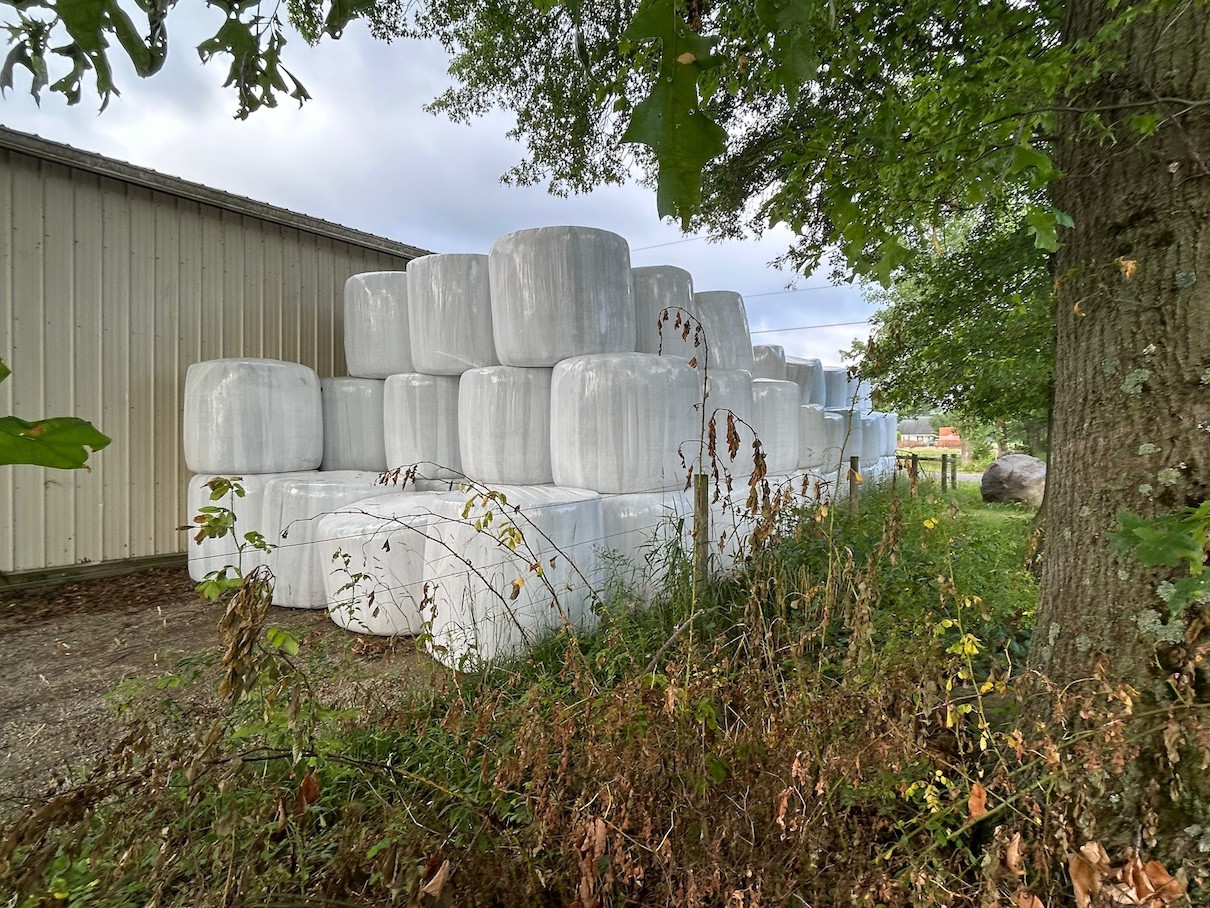
Wet hay is decedent of silage. The old farm silo is where green chop (Corn that was harvested still green and chopped up was put into the top of the silo and then sealed so it would ferment, yes ferment. So just like Betsy’s Fermented pickles from the Happy Pickler and real fermented sauerkraut can make more palatable food for us fermenting crops can do the same. They not only make a bester tasting product but feed the microbes in the cattle rumen to aid in the bolstering of their immune system. Instead of building big silos and putting grass in them to ferment. We dry our hay down to between 40-60% then bale it “wet” and wrap in in the while plastic you see above. In this anaerobic (without oxygen) environment the water and the sugars in the grass ferment and make a high palatable and soft forage that the cattle love.
The real reason we want a more palatable food for cattle is the better it tastes, the more comforting on its mouth the more they eat. The more they eat the better they gain. In the livestock business you don’t make any money on skinny animals. So you might ask why don’t we make all of our hay wet. It’s more expensive to make. Each big round bale costs about $12/bale more to make. The labor to wrap and the plastic costs are pretty high plus there is the fact that you are storing water. The bales have to be about 1/3 smaller because the equipment can’t lift them if they are too big. So you are handling and storing a lot more bales plus you are storing water. So we typically only do part of our harvest in wet hay. Trying to get first cut done in balage (wrapped wet hay) makes the most sense but 1st cut is always the cut you are in the most of a hurry so you sometimes don’t want to slow down to wrap it.
I think this is enough for now. I hope you can see making hay can be as much art as science and we really didn’t get into the making of quality hay. Plus if you do it wrong you live with it until next year. If you have more questions about hay please leave them in the comments and I will get to them.
I guess to start out with I should go with the disclaimers. I am not a soil scientist, I am not an agronomist, and I am not even a life long farmer. I am a farmer that came to agriculture with an open mind and experience in observation and engineering. It is my intention to try to explain the basics of soil fertility so you can be a better manager of the "dirt" in your life whether that is a flower bed, food plot, pasture or just your front yard.
There are several variables in soil fertility management that I will discuss over the next few weeks but like any former engineer I live by the credo – "If you can’t measure it, you can’t manage it". So we need to start our soil fertility management journey with being able to answer our first question.
Like any journey this one has 2 things in common with all journeys a beginning and an end. The beginning of the journey is where you are today. To know where you are at, or better said where your soil is at you will need to evaluate it. You will need to have it tested. You will need to learn about it. Soil has many attributes and you will need to know a little about each of these major attributes. The first is what type of soil you have. The second will be what nutrients are present in your soil and third and maybe most importantly to the health of your soil is how much organic matter and how healthy is the soil food web in you dirt? We will discuss each of these independently even though they are completely interrelated.
I said there were two things this journey has in common. I mentioned the first, but the second is a destination. Like the old adage, If you don’t know where you are going, any road will get you there. Therefore it is important to know what you are attempting to grow. What do you intend to grow in your soil and what type of soil does that vegetation like to grow in. Because as we test our soil there will be recommendations (course corrections) to what should you do to improve your soil. That will depend on the plants or types of plants you intend to grow. So let’s start this journey with our first step.
How do I know what kind of soil I have?
Soil can come in many different types, from sandy to clay or loam, or a combination of these (for example, sandy loam).
It’s easy to find out what kind of soil you have by performing a simple “jar test”. You can find instructions in this easy-to-follow how-to articlefrom Horticulture magazine.
How do I test the soil?
Soil Sampling Tools – You can collect soil samples using a shovel or spade, a soil sampling tube, or a soil auger. Tubes and augers should be stainless steel or chrome plated. A wooden rod will be helpful for removing soil from a sampling tube. If using a shovel or spade, make sure it’s clean and rust-free.
Amount of Soil Needed – You’ll need to collect enough soil for the lab to run the necessary tests – usually about 1 to 1 ½ cups. Many labs will send you a special bag in which to place your soil sample; just fill the bag to the marked line.
How to Collect Soil Samples – Each soil sample consists of small amounts of soil collected from a specified area. For example, if you’re testing the lawn, you’ll take small samples of soil from 10 to 20 random spots across the lawn. If you’re using a sampling tube or auger, simply withdraw as many core samples as you need. With a spade or shovel, dig a V-shaped hole to sampling depth and then remove a thin slice from one side. In all cases, remove vegetative matter from the surface before you sample.
You will be able to affect only about the top 6 inches of soil by adding amendments. For that reason, it’s best to take your soil samples from the top 6″ only.
As you remove the soil samples, mix them together in a clean container. Because soil will vary in color, texture, and consistency throughout the garden, soil testing is usually done on a ‘composite’ sample. If you’re using a pail to collect the soil, it should be plastic to avoid contamination from any trace metals. For example, soil will pick up zinc from a galvanized pail.
Remove 1 to 1 ½ cups of mixed soil from the container and place it in the sampling bag.
And that’s it – soil sample collected!
Where do I get my soil tested?
There’s no excuse not to test your soil – it’s easy and affordable. There are many soil testing companies found in the Yellow Pages or online. However, for most homeowners, the local Cooperative Extension offices provide all of the analyses needed, and at a very reasonable cost.
Cooperative Extension Offices – The Cooperative Extension offices of most state universities provide an excellent and affordable soil testing service. Most provide both testing and recommendations for adding fertilizer or amendments. Here is the link to the soil testing services for Ohio State University.
Commercial Labs – You may prefer to get your soil tested at an independent lab. Prices are often comparable to those offered through the Cooperative Extension offices and these labs may also offer additional tests, such as for pesticide or herbicide residue, nematode analysis, and plant tissue analysis. Bear in mind that many of these labs are focused on agricultural soil testing so be sure to use the right form when submitting your samples (i.e., a form for home gardeners). The lab I use is Spectrum Analytic.
How do I submit a soil sample?
Complete instructions are found on the websites of the various Cooperative Extension offices or commercial labs. Generally, the lab will provide a bag in which you will submit the sample. Some labs will even provide the shipping labels and boxes. Be sure to complete the order form with all the correct information. The lab will need to know what you’re growing in the area being tested (e.g., flowers, lawn, specific crops) so that they can provide accurate fertilizer and amendment recommendations.
How much does soil testing cost?
A basic soil test (e.g., Standard Nutrient Analysis) performed through a Cooperative Extension office generally costs around $10.00. Commercial labs are comparable for a basic soil analysis. Additional tests will add to the cost. Commercial soil food web analyses are in the $50 to $75 range.
How soon will I receive my soil testing results?
The typical turn-around-time for soil testing results is 3 to 4 business days from time of sample receipt except during April and May when it may take 1 to 2 weeks due to heavy sample load. Check with your local provider before sending in your soil sample, as times may vary.
Interpreting Results
There are 5 things to be looking at with the results of your soil test. We will discuss each of these in greater detail in the coming weeks but here they are: Type of soil, pH, Organic matter, Macro nutrients NPK, and micro nutrients. Most tests, when you submit your sample, tell the lab what you will be doing with the soil and they will make pH, macro and micro nutrient recommendations.
Summary
I know that this is as lot more detailed than I wanted to go on testing but I really need to stress if you are having any problems at all with production of whatever you are growing you need to know where you are at. That is what a soil test will get you. Next week we will discuss more in the management discussions.
To begin with with most, not all but most meat animals are raised and then harvested at an age that is similar to the age that they reach sexual maturity or at least close to it. If you were to look at beef, most ranchers and farmers will breed heifer calves so that they calf when they are 2 years old. That is the same age we begin to harvest grass-fed beef. To calf at 2 years old they would have been bred when they were 15-16 months old. This is the same age that conventional beef is harvested. Conventional beef can get to market quicker because grain feeding animals helps them put on fat quicker. This follows through with most domesticated species that have not been hybridized significantly for quicker growth. Conventional chicken comes to mind. Where typical laying chicken reaches sexual maturity at around 16-20 weeks old a Cornish-cross meat chicken is harvest at 7-8 weeks old. Back to the issue at hand, pigs reach sexual maturity at around 7-8 months old, which is the average age of harvested pork, Sheep mature between 8 months to 1 year which is about the same age they are harvested.
Getting back to lamb and veal, there are really 3 age groups in sheep, under a year old they are called lambs, over a year and under 2 years they are called hoggets and over 2 years they are called mutton. They can be sexually mature in all three age groups from 7 months old and older. Most lamb is harvested from 8-12 months old depending on the size the shepherd is trying to achieve. So in between birth and harvest, lambs are first on their mothers for 2-4 months, then weaned and graze on their own for 4-8 more months again depending on size. They are typically managed the same as older sheep. Here at Tierra Verde Farms they graze along side of either older sheep or cattle and get to live a full life.
Veal on the other hand is raised entirely differently. There can be a lot of controversy as to how some veal is raised but in general (without starting a holy war) Veal calves are typically male dairy calves that are taken off of their mothers in the first few days if not the first day of life, kept in small huts and fed milk (not nursed but bottle or bucket fed). They are raised for a few months until they reach a weight of about 300-400 pounds then harvested. This would take about 3-5 months. As you can see 3-5 months is a year short of them becoming sexually active. They are not allowed to graze as this would cause the meat to darken. Therefore, most veal calves are not only confined but live pretty isolated lives.
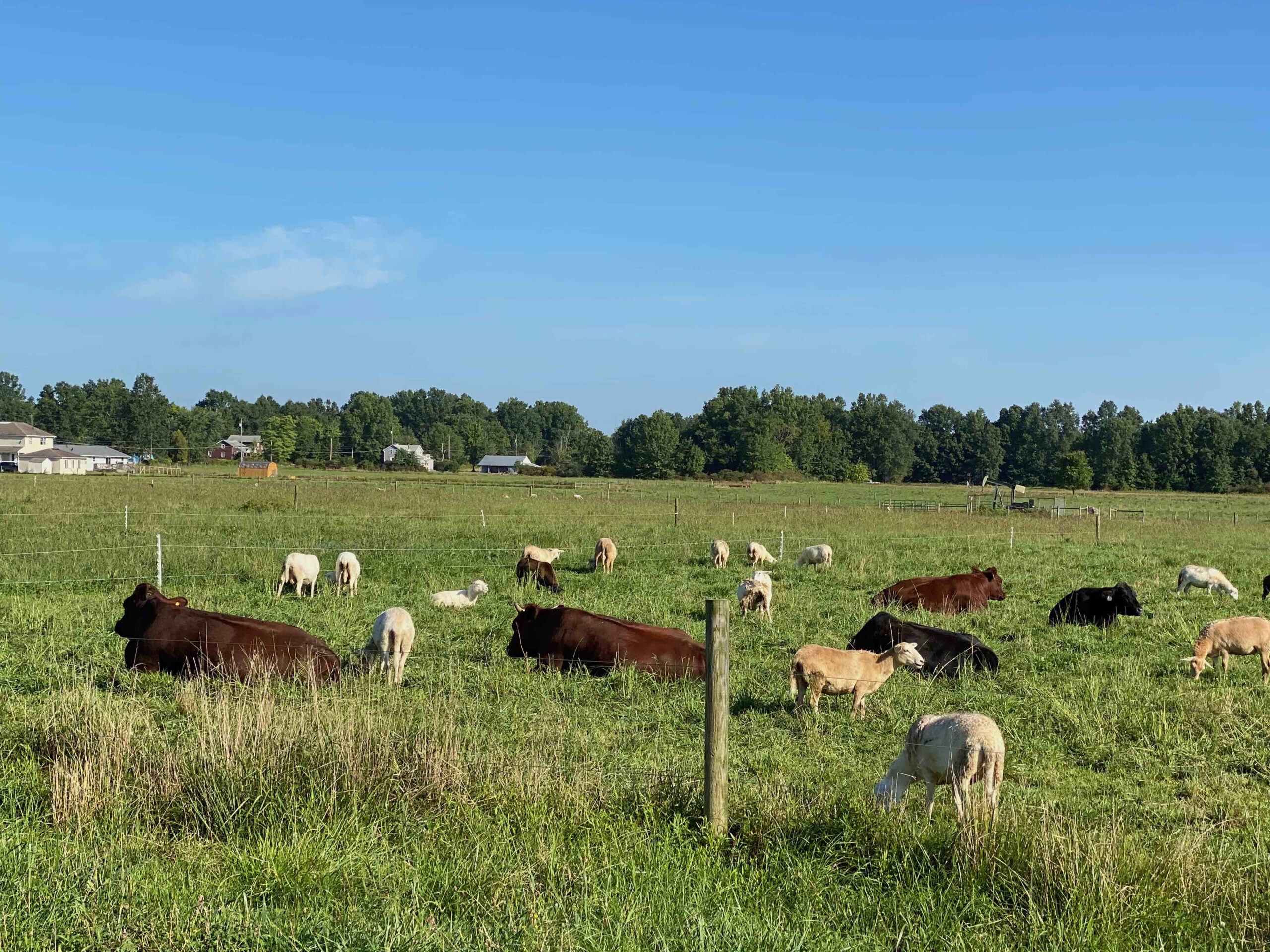
So looking at the differences of lamb and veal. Lamb is raised to at least the age of sexual maturity, is allowed to pasture with its peers and typically get to live a pretty normal sheep life. Where veal calves are isolated at birth, fed a restricted diet and kept separated from the herd to prevent darkening of the meat. We do not raise veal here at our farm for a number of reason, 1st, the calf is worth more to me if it is fully grown, 2nd, I don’t have a supply of fresh cows milk to feed the calves and 3rd, I don’t agree with how they are raised. In the attached picture you see beef steers right before harvest, with mature lambs and ewes grazing with them. It is hard to distinguish between lambs and ewes at this age to the untrained eye. Which is the point to the difference in how they are raised.
Thanks to Nadine for asking about this, I appreciate your concern over animal welfare and your diet. I hope this short answer was enough. If any of you have any questions feel free to drop me a line and I will try to answer them when I get some time.
When we started this series back in April, inflation was only at a 30 year high and I wanted to share with you techniques Connie and I use to save money on our food budget while not compromising our health or the quality of the food we eat. I don’t want to sacrifice any of the attributes of my food to save money. I need first and foremost nutrient dense foods, foods that can fuel this old body through the rigors of farming. Second, I really demand great tasting foods, foods that are a joy to eat and accurately represent the food they are not some imitation of the food. Thirdly, I believe over the years we have began to poison ourselves and it shows in cancer rates across society as well as other health problems that have become chronic in society and I believe the only way to stop this trend is to eat non-toxic, non-processed foods.
With all that said one of the final steps you can take in this journey with me is to grow some of your own foods. I know this sounds daunting if you do not currently grow anything. I am also aware that some of us have black thumbs and can’t successfully grow much. But the significance of the effort to grow a small portion of what you eat cannot be underestimated. So before I spend a lot of time trying to tell you what or how to grow food, which I will not do, I might make some suggestions of how to get started but I will not say do this or that. I think it is really important to understand why growing something, anything is important. Actually I think it is very important to grow something. If you can’t grow food grow flowers, shrubs anything. But more on some ideas on what to grow later.
So WHY is it important to grow some, a little bit of food. The most important reason to grow some food has to do with my second post in this series. Way back at the end of April we discussed the seasonality of food. I will not repeat all of the reasons that eating seasonally is important. If you need a review go back and read that post here: Eating Clean on a budget – Part 2 . Suffice it to say the benefits of seasonal eating are enormous. So what does that have to do with growing your own food. When you start to grow your own food, whether plant or animal, fruit or vegetable. You are inserting yourself into the the growing season. You immediately begin to know things you didn’t know before. I used to do some ocean sailboat racing. I even taught folks how to sail. The number one skill a sailor needs to have is to always, I say ALWAYS know where the wind is coming from. You cannot safely handle a sailboat if you are not sure of the wind. I used to ask pupils while we were just walking around, Where is the wind? It is something I am always aware of even though I haven’t sailed in over a decade. The same comes from growing food. You become intimate with the seasons. Last frost date, first frost date, 100 day corn, when the first tomatoes become ripe, when apples start to become ripe are a few of the telltale features of the change of the seasons the people who grow food are aware of, and for you to receive the full benefit of Part 2 in this series you need to not only eat seasonally but to live seasonally, after you get in-tune with mother nature because you are growing some of your own food. Think at how much of a better shopper you will become.
Now I am not silly enough to think you are all going to run out and plant half acre gardens. There are a lot of small ways to get started growing your own food that you can become aware of the seasons and you can save a lot of money. I will now go through and discuss some of the low hanging fruit in growing your own food. I understand that some of you might live in condos or apartments and don’t have the means to own your own dirt but container gardening is just if not more effective and easy.
One place I always like to start is herbs. We grow basil, cilantro, thyme, dill, rosemary, oregano, mint and chives (every one should grow chives, after you start them they are almost impossible to kill) and a host of others. What herbs to you use to cook with? Grow them. Herbs are incredibly expensive and yet easy to grow. You can grow annuals perennials inside or out, in dirt or containers. It is a wonderful way to save a little money and get your hands dirty.
Another easy way to get started for those with a yard is fruit. Purchase 1 apple tree, 1 sugar maple, 1 any type of producing tree and harvest it’s benefits. After you get started it is almost on autopilot and not a lot of work, just a few hours per year but can keep you in pie year round. One sugar maple tree of 1 foot in diameter can produce up to a quart of pure maple syrup a year on a few hours of work and almost no up keep.
Folks who live in the city limits of Kent can now own their own hens. While I don’t think anyone’s eggs are as great tasting as mine. Few things are as rewarding as your own hens and breakfast straight from the coop. The point is you are participating in your own food supply, you are becoming self sufficient and are beginning to understand the seasonality to life. What a wonderful experience.
The tertiary benefit to growing your own food besides becoming aware of the seasons and becoming even just a little self sufficient is that you begin to empathize with your farmers who try to produce food for you and understand why all the carrots aren’t perfect, why we have less eggs in the winter, sometimes the ugly food is just as tasty and clean just not pretty. Also you begin to appreciate it when your farmer does it right and you understand how hard it is sometimes to make pretty great tasting food without chemicals.
So my point, if I haven’t already belabored it, is that as soon as you participate in your own food supply you will be a more educated consumer and will be ready to take advantage of the seasons when they come your way. If I can help any of you in this venture drop me a note. I would love to help.
Up to this point all of the techniques I mentioned apply to the fruit/vegetable world in the same manner as they apply to the meat world. This one, not quite as much. I will speak mainly of the meat world because it is what I know better, but will mention places where it applies to vegetable and fruit buying as well.
The first really important point is cut selection. It applies to all different types of meat, Beef, Pork, Chicken or Lamb. I am just going to give you a number of examples so you get the idea. We do not have enough time to go through all but we can cover enough ground that you will see what I am talking about.
Let’s start with pork. Everyone loves a good pork chop. Going from the front of the hogs loin to the back you have Country Ribs, Rib Chops, Loin Chops then the Sirloin. Due to demand the Loin chops are the most expensive. We cut our Country Ribs to look like pork chops. They sell at a 25% discount to Loin Chops and in my opinion taste better. Typically they have a little higher fat content which adds to the flavor. So just by moving up the loin a little bit you can save 25%. Another area to slice 25% off your pork bill is to switch from regular sliced bacon to bacon ends. A side of bacon coming out of the smoker might not be a perfect rectangular shape. The butcher will slices a few pieces off of the end before they get the nice pretty long slice of bacon. We don’t throw those pieces away, we sell them as bacon ends. They are between $3 or $4 a pound cheaper than bacon. They are all that Connie and I eat in the bacon world. We have them in all 4 varieties of bacon and we sell at a large discount. If you are not making bacon wrapped shrimp or having company over it is a great alternative to bacon and you can save big. Just like bacon ends we have the same thing with ham ends compared to ham cubes.
In lamb my favorite go to savings is Shoulder Steaks and Sirloin Chops verses Loin or Rib chops. Sirloin Chops have a higher meat to bone ratio. A loin chop is more than 30% more expensive than a Sirloin Chop.
The next way to save big on your purchasing of quality meats requires a little sweat equity. If you were to buy Whole chickens or Whole cutup chickens, do a partial thaw, then part them out and refreeze you will find your savings will be substantial. We once had a class here on the farm on how to part out a chicken. After a few times you can typically part out a chicken in less than 5 minutes. If you were to buy a dozen birds spend an hour parting them out and then refreeze them you would probably earn close to $75 in savings in that hour. That works out to $150k per year. The point being is if you can sharpen a knife you can save big and eat the cuts you like to eat. The fact of the matter is the butcher is making all that money. We make more money on selling whole chickens than other cuts. The reason ground chicken products and boneless chicken products are so expensive is the butcher charges a lot of money for post processing a chicken. We want to sell all of those products to provide y’all with the food you want but remember this series is about saving money while eating clean. Owning a knife and knowing how to use it can save a bunch with very little time invested.
As we come to the end of this series I hope you found some techniques that will work for you. You don’t have to do them all, I just offered them as ideas to spark your own frugal gourmet. I guess I am dating myself with that reference. There might be another post in the series in the future but not next week. I feel like the last two might have taken some of you out of your comfort zone and I don’t want to whine about gardening right away. So have a great week, Hope to see you all this week.
Up to this point in this series we have been discussing just modifying existing behavior. Instead of buying the same food year round you would buy food seasonally. To get in-tune with mother nature and time your purchases to the seasons when food would be at its ripest, most flavorful and most nutrient dense. So buying food is something we all do we were just modifying WHEN you do it. Then last week we not only modified WHEN you buy but also HOW you buy. Purchasing food in bulk is still just buying food, you have just modified the amounts. You are well on your way to eating a nutrient dense, clean diet and you are still in your comfort zone.
Today, we are going to take our first step outside some of your comfort zones, we are going to talk about food preservation. That’s right I am going to talk about canning, freezing and drying foods. How to take the foods that you have grown (I will get to that next week) or purchased and preserve it at the height of its freshness to be used the whole year round. You will do all of that without adding toxic chemicals.
I only have experience in 3 methods of food preservation: canning, freezing and drying. Each of these methods uses science to either retard aging or to remove oxygen or moisture to prevent bacterial growth. I am a lay person on these subjects and am just sharing my experience. There is a wealth of professional information out these on these topics. I will share some of that with you today, but what I want to share with you first is DON’T BE AFRAID. This is way easier than it sounds, anyone can do it. Most importantly, in most cases it is not only very safe, God put a device in the middle of your face to help you detect any errors that might occur (your nose).
One of the simplest ways to preserve food is to freeze it. Outside the freezer itself it needs very little equipment or specific knowledge to do it safely. There are skills you can develop to make food taste better after thawing or to make food survive better in your freezer. Food can last in the freezer for about a year without degrading in quality. Typically the biggest mistake folks make with freezing food is not evacuating all the oxygen which contributes to freezer burn which is a quality issue not a safety one. You can buy vacuum packers to evacuate oxygen or use the old straw in the ziplock method if you choose not to invest in more gadgets. My mother and grandmother froze foods their whole lives without a vacuum packer. I have one and use it sparingly to keep costs down. Its great for meats and some veggies but otherwise you can do without. We can go round and round on opinions on types of freezers and I have and do own them all. For long term storage of food, you cannot beat a deep chest freezer for size(capacity), cost to operate and cost to buy. No, it is typically not an attractive appliance but it is a very useful one. I will give you a resource at the end of this article to provide you with specific knowledge of how to freeze. I just want to cover highlights here. The point is freezing food retards the decay of foods, it is a simple and safe way to preserve foods without a lot of specific knowledge. You can start today.
Number two of food preservation methods is typically scary for first timers but is really simple after your first season. Don’t let your initial unease stop you from trying. It is the way to preserve those great Ohio tomatoes for all year round. Canning, particularly fruits and veggies can be canned safely with a minimum of equipment and knowledge. There are so many websites and you tube videos that cover canning you can find them yourself. I might suggest that you check out the Ball site. Ball makes the canning jars that everyone knows about. I believe in the near future those jars will be worth a lot of money again but right now you can find old ones for cheap and new ones are pretty inexpensive as well. From an equipment point of view you need a large pot, jars, lids and a specific jar holder to get your hot jars out of the pot is about all you need. Certainly less than $30 and you’re off and canning. The science behind canning is to create a low oxygen environment. With out oxygen food cannot decay. That’s how it is preserved.
Food dehydration is something that Connie and I are just now exploring so I don’t have a lot to share from an expertise point of view. I would like to say we are starting simple. We started with dog snacks, which we sell as well to get used to the process. We also are starting to try to dry herbs this season so we can have basil, mint, chives and some of the other herbs we grow. I would really like to branch out if this experiment goes well. We also developed some recipes for jerky that I hinted about in my news letter and hope to have jerky for sale by June 1, if everything goes as planned. The science behind dehydration is to remove the moisture that causes decay to prevent food from going bad. If you vacuum pack dehydrated food you have removed moisture and oxygen for a great preservation method.
So as I begin to wrap up this week I really want y’all to give one or more of these methods a try. If you have questions ask. Shoot me an email or stop and ask at farm markets. Connie and I really do all these, we practice what we preach. I still have enough peaches and apples in my freezer to have pie every week until Labor Day. Actually this time of year we need to go through the cabinet and freezer to determine what we need to preserve this year and what we should be eating to make room from more stuff for next year. That a good problem to have when the government is warning about food shortages soon.
If you made it this far I am going to give you a gift that is definitely worth the price of admission. You read this far, I will now share with the you one of the best websites I have ever visited. This website has 1) calendar for Ohio of what is ripe when, 2) Farms where you can actually pick your own to save money, 3) how to can anything with beginner and expert instruction with picture for each specific fruit or vegetable, 4) How to freeze everything with the specificity. Even how to pressure can meats. When I first found this website I printed parts of it out because they were too valuable to leave just on internet. I wanted hard copy. Anyway without further ado: PICKYOUROWN.ORG. Seriously, leave yourself a few hours to explore this site. It is rare you find this much information in one place.
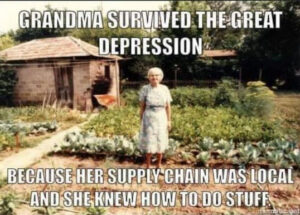
I hope you found this interesting. As times continue to get tough we need to remember we are a resilient people and we do not descend from a scared people. So in honor of all the Grandma’s out there that taught us we could do anything.
Last week I made the case that buying seasonally gives you the best chance of getting the best tasting foods. The second attribute that buying seasonally gets you is buying foods when they are the most plentiful. If you buy the ripest apples when they are in the middle to later part of harvest, they taste the sweetest. Right after the first frost the trees begin to push all that sugar into the fruit to help the seeds survive winter. The orchard has already been selling the early apples for a few weeks and know their coolers are starting to fill. You can now buy a lot of apples less expensively. They are at their most flavorful. The orchard has already met the latent demand of people waiting for the first apples of the season. They are now realizing they have to store all this fruit. This is when the best deals are available. Demand is low, supply is high, you can actually save the orchard/farmer money by you storing your apples instead of them storing your apples.
Fundamental economics of supply and demand tells us that when the supply is great in relation to the demand, prices will fall. If you couple the seasonal price fluctuations due to supply and demand with the volume discounts of buying bulk you can really begin to save real money.
If you take our farm instead of an orchard, we harvest our pastured pork from late June through about November. This allows us to grow pork on pasture and to not have to carry them through the winter where they gain less on the same amount of feed because they are using the energy to stay warm. So in June we will be stocking up on pork cuts we have run out of over the winter and spring.. About August or September we have met all of our latent demand and Connie starts to go through the freezer to organize everything to put the rest of the harvest in storage. This is when (hint hint) we will be having a large pork sale. If you were to time your pork buy until then say saving 10% because of a sale and 10% due to a volume purchase, because you bought one of our pork packages. Now you are saving over 20% on your pork without much work at all.
So you are combining the 2 techniques of purchasing seasonally and buying in bulk to achieve your maximum savings. If your farmers or suppliers are not thinking of a sale don’t be afraid to ask. From time to time I am in an oversupply of one cut or another, we keep really good inventory records and never let anything get old in our freezer. Most of the bulk discounts I offer are because a customer asked first. Our first discounted product ever were bulk buys of ground beef. Because we had a customer that bought a lot of ground beef and asked about a cheaper price if they bought a 100 pounds. It ended up being win win.
Don’t be afraid to ask your farmer or supplier for the best time to buy from them. I know my margins and my seasons so I can typically answer those questions. So can most other farmers. But do your own research, know your seasons of food. Get in step with nature. Once you begin to live seasonally, eat seasonally and buy seasonally in bulk you will be a happier person in tune with creation eating the best foods year round.
Obviously someone is storing this food. Either the orchard in the case of fruit, me in the case of meat or you. So the subject of food storage and preservation go hand in hand with buying bulk seasonally. But to address buying bulk and storing food in the same post would have been too long. So I will keep this one short and deal with storing food next week. I also will provide you with some of the best resources on how to store food out there. The ones I use. So until next week. God Bless.