Author: PIC

  • Genetics Matter, Why we raise the type of livestock we raise – Part 4 – Pastured Chickens

    Genetics Matter, Why we raise the type of livestock we raise – Part 4 – Pastured Chickens

    In 1955, the average size of a meat chicken in the grocery store was 3.07 pounds. It took 12-14 weeks to raise a bird that large back then. Today the average live weight of a chicken is 6.1 pounds that is after it is only 42 days old. That is a lot of change. Todays dominate chicken breed is the Cornish Cross 308. It doesn’t even matter where you buy your peeps they are all the same genetics. These chickens have been bred to grow so fast that at 7-8 weeks they begin to have heart attacks because they were never meant to grow that old. Mostly these chickens sit next to their feeders all day and just eat. Sometimes they will get up and walk (if they can) over to the waterer take a drink and back to the feeders. These birds produce large breasts, over half the cutup weight is breasts. I have a farm hand that told me once "if we don’t watch they will breed the feet off of these birds, They don’t walk anymore so its just wasted weight".

    Trying to raise this bird on pasture has been quite the challenge. They are very difficult to manage. Since they don’t like to walk it can take literally an hour to move our range coops. That’s an hour per coop, we can’t move too fast because we would run them over. Last year in the newsletter I discussed a new breed of chicken we were testing. With these new chickens we are able to move in 5 minutes per coop. That’s a big difference. In any event the Cornish cross birds are gross, stationary, pooping machines that produce breasts. Trust me I am not exaggerating the fact that they don’t walk. Between growing so fast the legs don’t develop fast enough to support them and the breast proportion being so large they were top heavy and falling forward. Another large issue with Cornish Cross is mortality. Cornish Cross are typically raised indoors in temperature controlled environments. So they really don’t fully feather out until it is almost time to harvest them. They don’t do well on pasture with the temperature swings of cold in the spring and fall with wet at any time. They weren’t bred for that. They were bred for producing 2 -1 pound breasts in 42 days and thats all they did.

    We tried and tried to be successful at raising Cornish Cross on pasture and last year I gave up. First I love all the livestock on our farm, I love my hens so it was not a chicken issue but hated meat birds. I was going to find a way to grow a chicken I could love or get out of the chicken business. Enter the Freedom Ranger. A hatchery in Pennsylvania started working on genetics based on the French Label Rouge program. The Label Rouge is a program to ensure a customer that an animal is raised in its natural environment with sustainable practices. It is really a quality assurance program for food products. But unlike our organic programs here in the states Label Rouge focused on animal welfare, which in the end makes a better product. I say frequently you can taste happy.

    "Freedom Ranger broiler chickens are great alternatives to fast-growing white broiler chicks and slow-growing heritage breeds. These active, robust chickens are suitable for free-ranging, foraging, and pasturing. They like to spend the day scratching and dust-bathing in the sunlight. Freedom Ranger chickens produce tender, succulent meat with high levels of omega 3 fats and low levels of saturated fat.

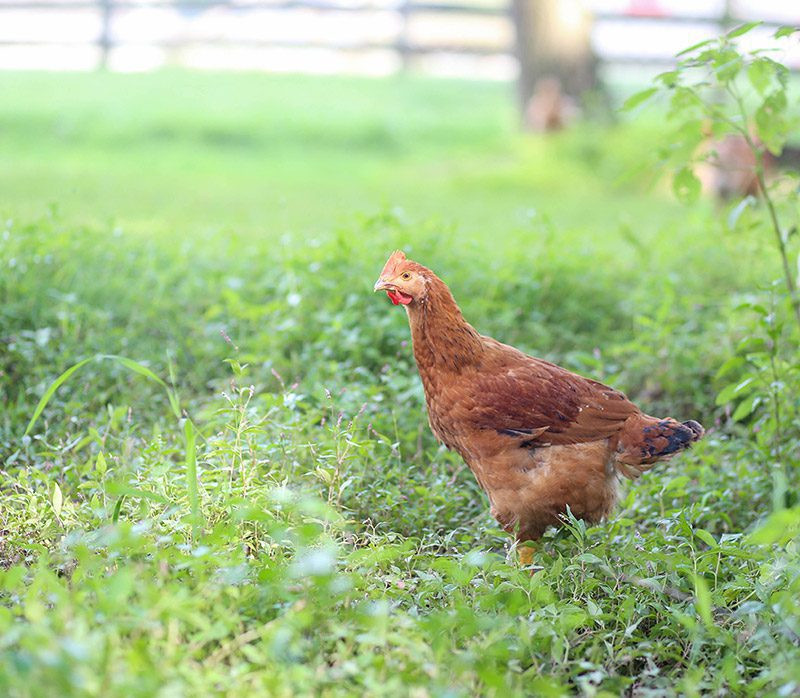
    Freedom Ranger Chickens come in two colors: tri-colored or red feathered. They also have yellow shanks, skin, and beaks, making them reasonably recognizable among flocks.

    These birds are also moderately fast growers and can reach 5 to 6 lbs. in just 9 to 11 weeks. We find that Freedom Ranger Chickens are a great alternative to fast-growing broiler chickens or slow-growing heritage breeds.

    These birds will naturally thrive when they’re allowed to forage, scratch and take dust baths in natural sunlight. As a result, you’ll have tender, succulent meat that contains more yellow Omega-3 fat and less saturated fat than other fast-growing breeds.

    Most Freedom Ranger Chickens have a very calm and friendly personality. Even as they age, we’ve found that these broiler chickens tend not to peck or show aggression towards each other too often. Especially towards people, they tend to be very friendly and curious.

    As we mentioned already, these birds are great broiler chickens. Unlike a lot of fast-growing breeds, Freedom Ranger Chickens take a bit more time to reach maturity. But because of this, they grow into healthier birds that have a higher and more flavorful meat density. They’re often sold to high-end restaurants for their savory flavor and create a rich, yellow soup stock.

    You read that it takes them 9-11 weeks to grow to the same size Cornish Cross do in 6 weeks. That is a big difference both in quality of meat product and quality of life for the bird and its general genetic nature. It can walk, has feathers get to do all the chicken things chickens like to do. We are really excited about this change. Last year we ran a test and it took us a few batches to "get it right" but we are confident enough that we changed all of our broilers to Freedom Rangers this year. We should be happier farmers and we hope this change will make you happier customers. They will take longer to raise but if we can get a better tasting product we should all be happy.
  • Genetics Matter, Why we raise the type of livestock we raise – Part 3 – Pastured Pork

    Genetics Matter, Why we raise the type of livestock we raise – Part 3 – Pastured Pork

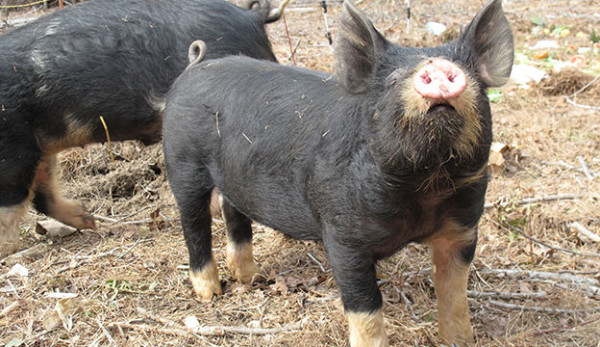
    Of all the animals on the farm the one that I believe has changed the most by selective breeding for adaptation to CAFOs (Confinement Animal Feeding Operations) is the hog. Back in 1800’s in the Americas, a man’s wealth was measured by how many hogs he owned. Hogs were raised for specific purposes. The Tamworth is known as a bacon hog because they had long bellies, the Large Black and Mangalitsas were lard hogs because they were so fatty, remember lard was a prized product in the 1800’s. Hogs were always raised outdoors and needed to be able to survive and thrive in the environment they found themselves in while providing value to the family.

    As CAFOs became popular we began to selectively breed out the characteristics that brought distinction to different hog breeds and their value. Since hogs can breed 2 times in a year they are an animal that is easily selectively bred very quickly. When you can get multiple generations in a few years you can "move" a breed very quickly. When you think of the "normal" pig the image that probably comes to mind is Porky Pig or Babe (our dog Sarah’s favorite movie, mine too, is Babe) you think of the prototypical pink pig. The breed would be called American Yorkshire or American Landrace. Both of these pigs have had most of the fat bred out of them so they are a hyper lean product (originally the fat was what made hogs valuable). They are also pink as I mentioned before. They perform very poorly outdoors for a number of reason not limited to – they get sunburned, and sunburned very badly. I have heard of novice farmers needing to apply lotion to pink pigs that were beet red from sunburn. They have been bred to live indoors under fluorescent lights. They don’t forage well, they don’t have much hair to help them handle swings in temperature. So we have allowed these Agro-business practices to take the once honored swine and turn it into a taste-less, fat-less piece of meat.

    To successfully raise hogs on pasture you need to go back to the basics or to Heritage Breeds of Hogs. Heritage Hogs refer to breeds that were here hundreds or even thousands of years ago when man found hogs living in the wild and first began to domesticate them and refine the breeds for locals where the folks raising them lived. Not for CAFOs but for the ability to thrive and provide value to the family.

    There are still a number of Heritage breeds of hogs available and they provide different attributes depending on what you are trying to do. Here is a summary list of some of the breeds available to us today.

    • Berkshire pork has a naturally smokey sweet flavor and is prized for its evenly distributed, mild-flavored, well-marbled fat. It is a relatively rare, highly protected pedigree breed.
    • Duroc pork is known for its incredible juiciness and relatively mild flavor, especially compared to the bold flavor of many heritage hog breeds. The pigs are a distinctive red color and have what can only be described as adorable droopy ears. It is the second most common breed in the U.S.
    • Gloucestershire old spots pork is even more difficult to find than some of these other breeds, but it is a well-marbled, nutty-tasting meat that butchers and chefs adore. It’s known for its top-notch maternal skills, allowing litters to be raised successfully on pasture.
    • Hampshire pork is lean, perhaps the leanest of any breed, with a fairly mild flavor. Purebred Hampshires are fairly rare and prized for making leaner cured specialties.
    • Mangalitsa pork is fatty. Fatty, fatty, fatty. And that’s why chefs love it. The creamy white lard from these hogs is perfect for making cured meats and pâtés.
    • Ossabaw pork is a fatty, dark-colored meat with a strong, spicy flavor. It comes from hogs that evolved running wild on an island off the coast of Georgia and survive seasonal food shortages, hence their high fat quotient. DNA evidence suggests this breed was originally brought in from the Canary Islands.
    • Red wattle pork has a strong flavor that really tastes of pork. It is a great match for spicy, bold recipes, which makes sense since it was originally bred in New Orleans. It’s known for its foraging abilities, letting some growers raise them as truly pastured livestock.
    • Tamworth pork is best known for making fabulous bacon since it has a big, long belly. It’s also known for its extra-large chops. Like Durocs and Red Wattle, Tamworth pigs are a lovely red color.

    I have personally raised all but the Ossabaw from this list. My favorites are the Berkshire, Duroc and Tamworth. I believe they provide the best value from a flavor and carcass yield point of view. I currently raise Berkshires because I think they are tops in flavor with micro-marbling of fat in the chops that just tastes great. Another reason I raise Berkshires is I found a breeder that can provide me with the numbers I need to raise. We don’t farrow (breed) our own hogs because it is a very specialized skill that I don’t seem to have. That or you need to invest a lot of money in heated barns to get the babies to survive to weaning. Either way I wasn’t good at it so we just buy newly weaned baby pigs. If your breeder cannot supply you with the hogs you need or want the only other choice in this area is the Kidron feeder hog auction. I have had very mixed luck at the feeder hog auction I either get great hogs that seem to pickup and bring back an illness or I don’t pick good hogs. So I have settled for finding breeders that can supply our needs.

    Our switch to Berkshires 2 years ago has been a very successful switch for us. I think our pork is as tasty or tastier than it has ever been. Supply has been good and our mortality rates (death rate) continue to drop. So our Berkshire hogs adapted very well to being raised on pasture and can thrive in the environment we have set up for them.

    Next week we will talk about our latest breed selection which will be a switch to Freedom Ranger chickens.

  • Genetics Matter, Why we raise the type of livestock we raise – Part 2 – Beef Cattle

    Genetics Matter, Why we raise the type of livestock we raise – Part 2 – Beef Cattle

    As we covered last week, in the post industrialization age of agriculture for beef we have developed CAFOs (Concentrated Animal Feeding Operations) or feed lots where we bring yearling cattle to fatten them in a hundred days or less on large amounts of carbohydrates. In this drive we have selectively bred cattle for this purpose. We have seen the drive forward of the Black Angus breed. The Black Angus Breed Association has done a masterful job of marketing to the general public that Angus is the breed to eat. But actually they never considered flavor while developing and promoting the breed to farmers and ranchers. It is all about feedlot efficiency.

    The Angus is a breed that can reach 900-1000 lbs in its first 12 months on pasture and grain. They typically need to grain them right out of the chute, so their rumens will be accustomed to digesting grain when they get to the feed lot. First to the auction then the feed lot. Feed lot operators wanted an animal that can gain 400 lbs in 100 days on feed. When an animal gains that much weight that fast most of that weight will be fat. Instead of going into great detail of why I believe grass-fed beef is far superior to grain-fed please read my blog posts from last year on the subject. The first one is Introduction to Grass-fed Beef .

    So the beef we typically have has been developed for a) grain feeding and b) confinement feeding. Both of these preform poorly under grass-fed operations. So to successfully bring grass-fed beef to market you want beef selectively bred for grass only production. Typically grass production takes a little longer, so raising a breed that gets to market sooner is an advantage because in grass production you need a lot of real estate so you need to be efficient with your resources. If they finish faster your land can carry more head year over year.

    Smaller is the key, some of the advantages of smaller cattle are: a) cattle don’t fatten until they reach their adult height. Animals that are superior grass harvesting machines and are smaller give you an efficiency advantage, b) Weaning percentage is the next advantage of smaller cattle. When you have a 1400-1500 pound mama cow and she weans a 500 lb calf she has a weaning percentage of about 30% (500/1500) when you have a 1000 lb cow weaning the same 500 lb calf you have a weaning percentage of 50% (500/1000). This is a big deal. A mama cow that weighs 1500 lbs will eat about 20 large round bales of hay (hay or grass equivalent) annually where a 1000 lb cow will eat 14 round bales. That is 6 round bales difference and at $50/bale value its $300/year cheaper per calf per year to have smaller mama cows.

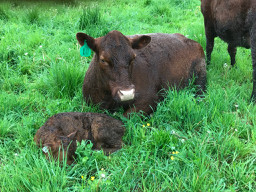
    There are several breeds that are good forage or grass eaters, Red Angus, Red Devons and South Polls, to name a few. I raised Devon cattle for 10 years and was just having a hard time making it profitable. They took a long time to mature (get to market weight and fatten) and the cows I owned ranged from a small of 1300 to a large of 1700. These are very expensive animals to own. They made a good grass-fed product but I was getting killed in production expenses. Then I found the South Poll breed which is a 4 breed hybrid that maintains their own registry. This is a US developed breed originally from the south but has adapted to our latitude quite well. They build the breed around 1) grass feeding only, 2)small efficient mama cows and 3) easy fleshing for quick time to market.

    I have been raising South Polls for 4 years now and have seen a big difference. 1)My average cow size went from the 1300-1500 lb range to the 900-1100 lb range. This is a huge difference in the cost and acreage need to support these girls. My average time to market (age to get a beef ready to harvest) went from 38 months with Devons to 30 months with South Polls and this is only after a few years. As we hope to get better with the breed in our own breeding program we are hoping to pull that down to the 24-28 month time frame. That time frame will allow us to grow by 30-40% with needing zero more acreage to graze. This is a huge cost savings.

    Take a look at the South Poll Breed Introduction Video if you want to know more. But as far as selective breeding, we went back to the drawing board to look for a cattle breed not bred for feedlot and grain finishing but for a breed that finished well on grass and is efficient and economical. Next week we will continue to discuss more breeds we raise at Tierra Verde Farms.

  • Genetics Matter, Why we raise the type of livestock we raise. – Part 1,

    Genetics Matter, Why we raise the type of livestock we raise. – Part 1,

    So how did we get here?

    Man has been selective breeding livestock for desired traits as long as we have been shepherds and herdsman. At first nature had selectively bred the livestock in the wild to survive in the elements or environment in which they lived. But as man began to domesticate animals some traits were more desirable than others. So if man was raising cattle or sheep and the momma cow or ewe gave more milk than her offspring needed we could drink that milk or make cheese and butter with it. So you could see that giving more milk would be a desirable trait. So we might keep her offspring to breed more of them to have more livestock with this desirable trait. Makes sense. Man did this process of thousands of years producing many different types of breeds of livestock and animals to meet our various needs. This went along very well for a very long time.

    Until WWII we were still pretty close to our food supply. We didn’t have big box grocery stores that in-turn produced big box slaughter houses, that in turn produced big box farms. When the industrial revolution came to our food supply and our prosperity removed us from knowledge of the food chain, we started to replace the farmer with the farm manager. Someone who’s job it was to watch the bottom line of the corporate food manufacturing business. I want to take a slight detour here to mention I am a capitalist and believe in profit and believe a farm that is not profitable should go out of business. But I also believe I am a steward of God’s creation and this little piece of earth I manage and the livestock on it. There needs to be a balance there. So with that said as our farm managers began to try to be more profitable we developed the CAFO. The Confinement Animal Feeding Operation is a title to a farm that really is a food factory that was developed(post WWII) to produce the most tons of food the quickest and cheapest. Some examples of CAFO are large feedlots of cattle you see and really high density, or the chicken coops that house tens of thousands of birds so close together they cannot walk. These CAFOs have brought about 3 very bad trends in our food supply. I will briefly mention 2 here but will spend the rest of this series discussing the third which is the genetic changes in livestock that are bred for CAFO operations.

    The first change in our food supply that has adversely affected the quality and purity of our food due to CAFO operations is the proliferation of antibiotics and medication in our food supply. If you have raised children you know how many colds they can bring back from school because of how close the contact is at school. Well when you bring thousands and tens of thousands of heads of livestock together in very crowded conditions 2 things happen. The first is communicable disease is very easily transmitted because of the closeness of the livestock. It also spreads quickly because, just like in humans crowds cause stress, stress causes a negative immune system response so that not only is there more disease that is "going around" the livestock are less likely to fight off the infection or bug because their immune response is compromised. So the industry response to this is to dispense antibiotics in high numbers and dosage to prevent the livestock from getting sick. Sickness costs money so to prevent sickness the industrial food supply has chosen to treat it rather than prevent it.

    The second change is a quality issue. We have lost flavor and nutrient density of our foods. You ask why have we lost flavor and nutrient density because of CAFO operations? You are what you eat! So is your food. As we have developed large feeding operations we now feed just about anything to an animal to gain weight. We are not nearly as interested in flavor as we are size. The farm manager want 3-4 lbs a day gain on their steers or they aren’t making money. So we see CAFO’s feeding scrap pasta, bakery waste, out of date candy. Just about anything that will put weight on. You have heard of empty calories. That’s what we end up feeding our livestock. Garbage in = Garbage out. If we don’t put nutrient dense foods into our livestock, we won’t get nutrient dense food out. So we are what we eat as well. I will tangentially touch on this a little more talking about genetics. But for now let me say that CAFOs are NOT feeding livestock the breakfast of champions. I mentioned flavor as well. Besides the loss of their natural diet, In an effort to get the livestock to grow quicker they lose flavor. Typically the older an animal is the more flavor it has. Over centuries we humans have determined the optimum age to slaughter animals made for meat is about when they become sexually mature. Most chickens become sexually mature in 16-20 weeks, your average grocery store broiler is 7 weeks old. That is a lot of flavor loss. It is my job to hit the happy medium between flavor and tenderness (the older they get the tougher they get as well).

    I want to wrap up this weeks post bringing us back to selective breeding and why we use the breeds we do. So as CAFOs became the prominent style of livestock food production man began to selective breed for traits in livestock that thrived in that environment and not their natural environment. Like a chicken that can go from birth to harvest in 42 days, Like cattle that reach 1300 pounds in 13 months. Typically the 42 day old chicken doesn’t have all of its feathers yet, but they don’t need feathers they are in an artificially lighted, temperature controlled housing unit. Next week I want to start with poultry, specifically our broilers or meat chickens and discuss the difference between conventional breeds and the breeds we are using. If you have followed our farm for a while I have been talking about switching the breeds of chickens we raise and what we are finding. I will bring you some of those results and what we plan for this year and what it will mean to you. Thanks for listening.

  • The Flat Steaks

    The Flat Steaks

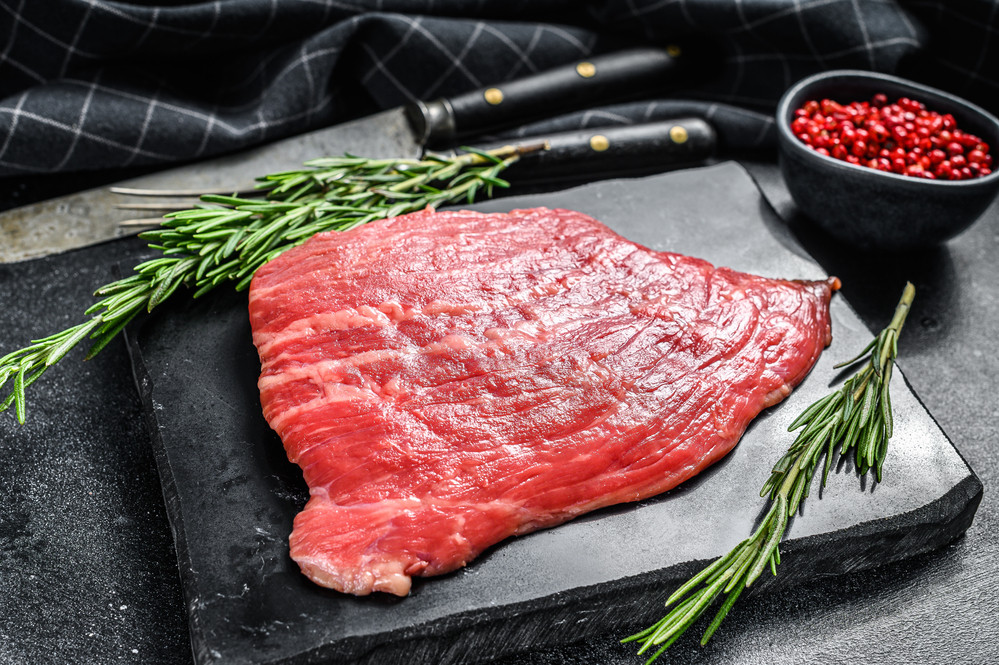
    There are three beef steaks that stand out as being unique. While most great steaks come from the loin and the rib, these steaks come from other regions and are not cut from thick roast sections. These three great steaks are the Flank, the Skirt, and the Flat-Iron. They are not sliced by the butcher, they are the shape and size they are. These three steaks are full of flavor but can be tough, so they need to be marinated and/or properly cooked.

    Flat-Iron Steak

    The flat iron steak has gained popularity, now appearing in grocery stores and on restaurant menus as a good alternative to more expensive steaks; it is nearly as tender as a tenderloin at a fraction of the cost. Flat iron steak—also known as a top blade steak, top blade filet, and shoulder top blade steak—is cut from the shoulder of the cow (called the chuck) and is nicely marbled with lots of beefy flavors.

    When cooked properly, a flat iron steak turns out tender and juicy. Originally part of the top blade roast, the flat iron was born as a result of the tough connective tissue that ran through the middle of the cut of meat. Once this is removed, the two pieces are treated separately, one becoming the flat iron steak, the other called the top blade steak. The flat iron (supposedly named because it looks like an old-fashioned metal flat iron) is uniform in thickness and rectangular in shape.

    The nice amount of marbling creates a steak that is extremely tender and full of flavor. It is best when cooked on the grill and can be incorporated in a variety of recipes of these three steaks, the ​Flat-Iron is probably the least known. In part, this is because this steak finds its way into restaurants and butcher’s barbecues more than it does the display case. You will probably have to ask for this steak. Prepared right, this is a great steak.

    Skirt Steak

    The Skirt Steak is probably the best of the three. The skirt has more fat and therefore, more flavor and grills up juicier. This steak is, of course, the original steak of Fajitas and because of that it tends to disappear quickly as it gets bought up by restaurants. The skirt steak is, however, worth the search. Find a good butcher and he’ll set you up. With skirt steaks, you want to remove any traces of the membrane that surrounds it. Once cooked this will be too tough to get through.

    Skirt Steak is one of the most flavorful cuts of beef, and even though it’s also one of the tougher cuts with a lot of connective tissue, it’s still a great steak for grilling. Skirt steak comes from either of two separate muscles inside the chest and abdominal cavity, below the ribs, in the section of the cow known as the beef plate primal cut. The two muscles are the diaphragm muscle, called the outside skirt, and the transversus abdominis muscle, or inside skirt.

    Inside and outside skirt are pretty similar; both are long, flat muscles with a very thick grain that runs across the length of the muscle. These narrow pieces of meat can be about 20 to 24 inches long and three to four inches across once they’ve been trimmed. We only sell the outside skirt steak because we feel it is a little less tough and more flavorful than the inside skirt.

    Flank Steak

    The Flank Steak is one of many peoples favorites. While it is leaner than the Skirt or Flat-Iron it has great flavor and a fantastic coarse texture that you just don’t find in other cuts. The Flank steak is flat and great for rolling with stuffing. It grills like a dream. ​Flank Steak is a common meat used in Fajitas and Carne Asada.

    Marinading Flat Steaks

    So now you know what you are dealing with, so how to you deal with it? Like I said these steaks need to be marinated in a strong marinade for a good length of time. When I say a strong marinade I mean it needs to have a good source of acid. You get the acid from vinegar or fruit juices. Think of good fajitas, loaded with lime flavor. Well, that lime flavor comes from the lime based marinade used to make the meat tender. Citrus juices, in particular, have a strong acid that breaks down meat tenderizing it. You should plan to marinade for a good six hours if not overnight. Now don’t be too zealous or you’ll end up with beef mush. The marinade needs to tenderize not devour.

    Grilling Flat Steaks

    These three steaks were made for grilling. Any other way of preparing them that doesn’t require very long roasting times will make them tough and cook out all the flavor. You want to grill these steaks hot and fast. You don’t want to grill these steaks too long. If you like your steak well done choose a different steak. These cuts need to get out of the fire about as fast as you grill them. Medium is pushing the limits. Medium Rare is perfect.

    Rest the Steak

    Once you have your Flat Steak grilled to perfection, get it off the grill, allow it to rest for about five minutes and carve. Carve? Yes, these steaks need to be properly cut before serving. Carve flat steaks across the grain to make them even more tender to eat, serve them up with practically anything. These steaks work for so many dishes it would take all day just to read through the list.

    Summary

    You can use all three of these steaks for the same application and sometimes there is a best choice for the recipe at hand. Keep in mind, for leanness, Flank is most lean, then Flat-Iron and the Skirt will be the least lean or most fat cover. For tenderness, Flat-Iron is most tender, then Flank and then Skirt. For applications: Fajitas the typical steak used especially in restaurants is the Outside Skirt Steak, Carne Asada would be the Flank. I personally think the Flat-Iron is the most flexible, We frequently have it just seasoned, grilled and sliced against the grain and put on salads.

  • For the love of bacon.  Part 2

    For the love of bacon. Part 2

    Why to we cure meats?

    In my previous blog post I mentioned that we have been curing and smoking(drying) meats since around 7000BC. We did this mainly as a preservation process. When we apply a salt like Sodium Nitrite and then heat or smoke the meat we not only drive out all the moisture where bacteria might grow we also kill any bacteria present. So the long and the short of it is we cure and smoke meats and have been doing for 9000 years to stay healthy. By using this technology we have made our food supply safer. You need to keep in mind that large scale refrigeration was only wide spread in the last century. Over the years we have developed a taste for this "safe" meat. Today I will discuss a bit of the science behind curing and smoking. Next week we will talk about which of these option we use here at TVF and why.

    What are the methods of curing bacon?

    There are two primary methods of curing bacon: pumping and dry curing. Although less frequently used, Some processors still use immersion-cured bacon. "Pumped" bacon has curing ingredients that are injected directly into the meat to speed up the curing process. This type of bacon is held for curing for 6 to 24 hours before being heated or smoked. "Dry-cured" bacon has a premeasured amount of cure mixture applied or rubbed onto the bacon belly surfaces, completely covering them. Additional cure may be rubbed in over a number of days, but the amount of added sodium nitrite cannot exceed 200 parts per million (ppm). After the curing phase, the bacon may be left to hang for up to 2 weeks in order for the moisture to be drawn out. Less time is needed if it is going to be smoked. Because of the lengthy processing time and labor required, dry-cured bacon is more expensive than the more mass-produced, pumped bacon. "Immersion-cured" bacon is placed in a brine solution containing salt, nitrite, and flavoring material or in a container with salt, nitrite, and flavoring material for 2 to 3 days. Sugar, honey, or maple syrup may be added to the brine. The meat must then be left to hang until it is cured.

    Can bacon be home cured?

    Yes, you can make bacon at home. For instructions, contact your local Extension Office or visit: http://muextension.missouri.edu/explore/agguides/ansci/g02528.htm 

    How is cooked bacon made shelf stable?

    To make bacon safe to store at room temperature (shelf stable), it is precooked in the plant to have a water activity at or below 0.85 to control Staphylococcus aureus. The cooked yield is 40% of the raw weight.

    Is bacon "red" meat?

    "Bacon" can only be made from pork bellies, which are red meat by definition. Pork is classified as "livestock," and all livestock are considered "red meat." Bacon can also be made from other species of livestock (e.g., beef) and poultry (e.g., turkey). These types of bacon products require a descriptive name such as, "Beef Bacon-Cured and Smoked Beef Plate" and "Turkey Bacon-Cured Turkey Thigh Meat."

    Is "salt pork" the same as bacon?

    Salt pork is not bacon. Although it is salted, it is much fattier, and, unlike bacon, it is not smoked. It is generally cut from the hog’s belly or side. Because salt pork is so salty, cooks often blanch or soak it to extract some of the salt before using.

    Does bacon contain additives?

    Yes. Bacon is made with salt as a curing agent, and nitrite (but not nitrate) is the other most frequently used additive. Bacon may also contain other additives such as sugars, maple sugar, wood smoke, flavorings, and spices. Pumped bacon (see above) must also contain either ascorbate or sodium erythorbate (isoascorbate), which greatly reduces the formation of nitrosamines by accelerating the reaction of nitrite with the meat.

    At certain levels, salt prevents the growth of some types of bacteria that spoil meat. Salt prevents bacterial growth either by directly inhibiting it or by its drying effect. Most bacteria require substantial amounts of moisture to live and grow.

    Sodium nitrite produces the pink color (nitrosohemoglobin) in cured bacon. Nitrite also greatly delays the development of the Clostridium botulinum toxin (botulism); develops a cured-meat flavor; retards the development of rancidity, off-odors, and off-flavors during storage; and inhibits the development of a warmed-over flavor.

    Sugar is added to reduce the harshness of salt. Spices and other flavorings are often added to achieve a characteristic "brand" flavor. Most, but not all, cured meat products are smoked after the curing process to impart a smoked meat flavor.

    Researchers at the USDA found that the addition of vitamin C (also known as ascorbate) and vitamin E (also known as tocopherol) reduced the levels of nitrosamines in fried bacon and in nitrite-cured products. The findings led to changes in Federal regulations and industry processing to minimize consumer exposure to nitrosamines. USDA now requires adding 550 ppm (parts per million) of either sodium ascorbate or sodium erythorbate to pumped bacon. This addition greatly reduces the amount of free nitrite and, thus, minimizes the formation of nitrosamines.

    How much nitrite can be used in curing bacon?

    The USDA is responsible for monitoring the proper use of nitrite by meat processors. While sodium nitrite cannot exceed 200 ppm going into dry-cured bacon, sodium nitrite cannot exceed 120 ppm for both pumped and immersion-cured bacon.

    Can bacon be made without the use of nitrite?

    Bacon can be manufactured without the use of nitrite, but must be labeled "Uncured Bacon, No Nitrates or Nitrites added" and bear the statement "Not Preserved, Keep Refrigerated Below 40 °F At All Times" — unless the final product has been dried according to USDA regulations, or if the product contains an amount of salt sufficient to achieve an internal brine concentration of 10% or more, the label does not have to carry the handle statement of "Not Preserved, Keep Refrigerated below ___" etc. Recent research studies have shown for products labeled as uncured, certain ingredients added during formulation can naturally produce small amounts of nitrates in bacon and, therefore, have to be labeled with the explanatory statement "no nitrates or nitrites added except for those naturally occurring in ingredients such as celery juice powder, parsley, cherry powder, beet powder, spinach, sea salt etc."

    Is bacon inspected?

    All bacon found in retail stores is either USDA inspected for wholesomeness or inspected by State systems that have standards equal to the Federal government. Each animal, from which the bacon is made, is inspected for signs of disease. The "Inspected and Passed by USDA" seal ensures the bacon is wholesome.

    Can the term "natural" be used on bacon?

    Yes, bacon can be labeled as "natural" if the bacon is "uncured." This means the bacon does not contain nitrites or nitrates as direct additive curing agents. Therefore, the bacon would meet the definition for "natural" (minimally processed, no artificial ingredients) and can be labeled as "Natural* Uncured Bacon (No Nitrates or Nitrites Added, Not Preserved, Keep Below 40 °F At All Times), *Minimally Processed, No Artificial Ingredients."

    Is a safe handling label required on bacon?

    Yes, the USDA requires safe handling instructions on packages of bacon and all other raw or partially cooked meat and poultry products as part of a comprehensive effort to protect consumers from foodborne illness.

  • For the love of bacon.  Part 1

    For the love of bacon. Part 1

    Bacon

    It’s the "B" in a BLT sandwich, the star of breakfast buffets, the garnish on a spinach salad, and the "pork" in pork-and-beans. Bacon imparts a smoky flavor to innumerable dishes. This ancient, cured meat now appears in such modern forms as shelf-stable or refrigerated fully cooked strips, bacon can be made from pork, beef and I have heard tell that you can make bacon out of turkey but I don’t believe it.

    Here at Tierra Verde Farms we call bacon "Meat Candy". There are now top shelf restaurants that make hors d’oeuvres out of thick cut bacon and then candy the outside. I am also seeing recipes for and getting requests for steak cut bacon, That would be bacon in 1" thick slices that serve as the main course in a meal. Bacon can be the driver or the seasoning on any meal. A very flexible and tasty food.

    History of Bacon

    Bacon has an ancient history. The domestication of "pigs" (immature hogs) for food dates back to about 7000 B.C. in the Middle East. Some historians say that bacon made from hogs was a favorite of the early Romans and Greeks. About 500 years ago, bacon or bacoun (a Middle English term) referred to all pork. The term derived from bako (French), bakkon (Germanic), and backe (Old Teutonic) that refer to the "back" of the hog.

    European peasants in the 1500’s couldn’t afford to buy pork often. It was a sign of affluence if a man could "bring home the bacon." They would cut off some for guests and sit around "chewing the fat," now a colloquial term for "having a discussion." The term "bringing home the bacon" now means "earning a living" or "being successful."

    Bacon is made in many countries of the world. In Germany, it is called speck; Netherlands, spek; France, lard or bacon; Italy, pancetta; and Spain, tocino or tocineta. It can be made from several different animal species including pork, turkey, and beef. Bacon can also be made from various parts of an animal; thus, its appearance can vary.

    What is bacon?

    The term "bacon" is used to describe the cured belly of a swine (hog) carcass. If meat from other portions of the carcass is used, the product name must identify the portions where the bacon comes from, e.g., "Pork Shoulder Bacon." Bacon is generally produced from young animals (6 to 7 months old) that weigh between 175 to 240 pounds.

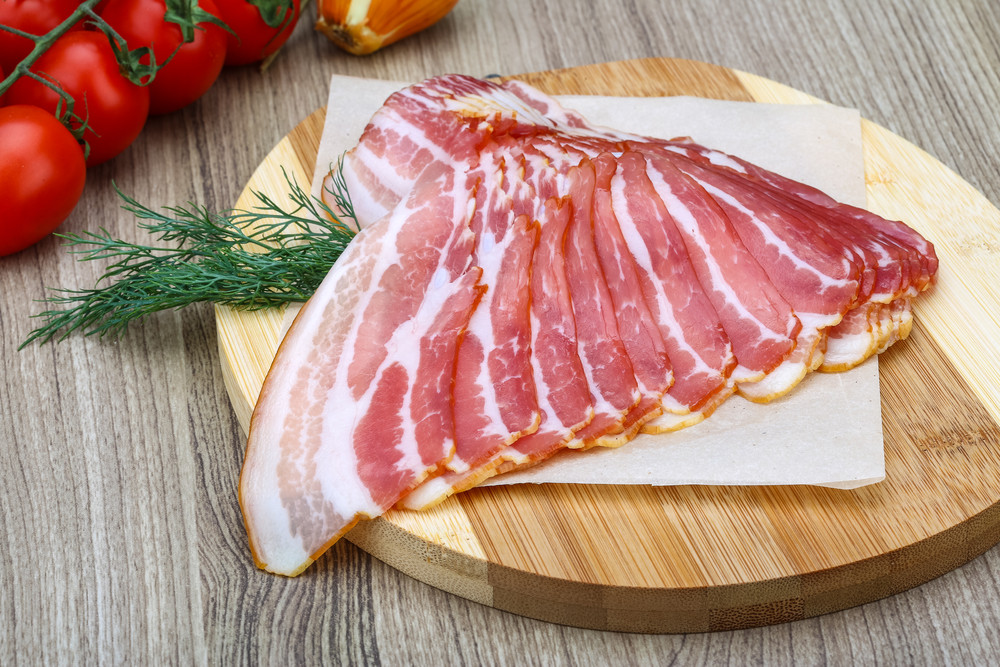
    Pork bacon without any other descriptors is raw (uncooked) and must be cooked before eating. Most bacon sold in the United States is "streaky" bacon, long narrow slices cut crosswise from the hog belly that contain veins of pink meat within white fat.

    In addition to "streaky" bacon, other U.S. favorites are American-style Canadian bacon (round slices of pink meat from the loin), turkey bacon made from light and dark turkey meat, and beef bacon is typically prepared from the plate of the beef.

    How is bacon made?

    Several steps are involved in producing sliced bacon. First each pork belly is skinned and any ragged edges trimmed. After curing with salt and nitrite (more of nitrates in future installment), the pork bellies are heat processed. Mass-produced bacon is heat processed in large convection ovens. It is much faster to mass produce bacon using a convection oven (as little as 6 hours) than by traditional smoking (many days).

    Bacon receives its smoke flavor from natural smoke obtained by smoldering wood chips or by spraying the bacon with a liquid smoke extract.

    After heat processing and smoking, the bacon must be chilled to below 40 °F before it is sliced. The majority of bacon is sliced before packaging. Because of the added salt and nitrite, bacon is far less perishable than other raw meat products. Even so, the chilling is done quickly to prevent bacterial growth and promote its shelf-life.

    At Tierra Verde Farms our bacons are hickory wood smoked for 10-12 hours and will reach a minimum internal temperature of 150 degrees Fahrenheit. So they are actually fully cooked(pork should be cooked to an internal temperature of 145-160 degrees depending on cut to be considered fully cooked) but will be labeled as not fully cooked because they are not shelf stable (shelf stable means they can keep at a room temperature without bacterial growth). They will last a long time in your refrigerator just not on a shelf.

    Next week we will discuss the different cures used in making bacon and the impact that has on the label.

  • Eggs 101, Nutrition

    Eggs 101, Nutrition

    In the 1930s, scientists and food producers were creating the first plans to take poultry off family farms and raise them in confinement. To enact their plans, they needed to create “feed rations” that would keep the birds alive and productive even though they were denied their natural diet of greens, seeds, and insects. It was a time of trial and error. In a 1932 experiment conducted by the U.S. Department of Agriculture, breeding hens were taken off pasture and fed a wide variety of feed ingredients. When the birds were fed a diet that was exclusively soy or corn or wheat or cottonseed meal, the chickens didn’t lay eggs or the chicks that developed from the eggs had a high rate of mortality and disease. But when birds were fed these same inadequate diets and put back on pasture, their eggs were perfectly normal. The pasture grasses and the bugs made up for whatever was missing in each of the highly restrictive diets. 

    Eggs from hens raised outdoors on pasture have from three to six times more vitamin D than eggs from hens raised in confinement. Pastured hens are exposed to direct sunlight, which their bodies convert to vitamin D and then pass on to the eggs. Vitamin D is best known for its role in building strong bones. New research shows that it can also enhance the immune system, improve mood, reduce blood pressure, combat cancer, and reduce the risk of some autoimmune disorders. This good news about eggs comes from a study released by Mother Earth News, a magazine that plays a leading role in promoting health-enhancing, natural foods. The editors found that eating just two eggs will give you from 63-126% of the recommended daily intake of vitamin D. Note that this benefit comes only from hens that are free to graze fresh greens, eat bugs, and bask in the sun. Most of the eggs sold in the supermarket do not meet this criterion. Even though the label says that the eggs are “certified organic” or come from “uncaged” or “free-range” hens or from hens fed an “all-vegetarian” diet, this is no guarantee that the hens had access to the outdoors or pasture. Look for eggs from “pastured” hens. You are most likely to find these superior eggs at farmer’s markets or natural food stores.

    As it turns out, all those choices of eggs at your supermarket aren’t providing you much of a choice at all. Recent tests conducted by Mother Earth News magazine have shown once again that eggs from chickens that range freely on pasture provide clear nutritional benefits over eggs from confinement operations. Mother Earth News collected samples from 14 pastured flocks across the country and had them tested at an accredited laboratory. The results were compared to official US Department of Agriculture data for commercial eggs. Results showed the pastured eggs contained an amazing:

    • 1/3 less cholesterol than commercial eggs
    • 1/4 less saturated fat
    • 2/3 more vitamin A
    • 2 times more omega-3 fatty acids
    • 7 times more beta carotene

    When I started this series it was to answer the questions that so many customers ask, Why are our eggs different? Because our hens are pastured. It not only makes a significant difference in nutritional value of the eggs as I have documented here, it also makes a big difference in how they look. Since our hens get fresh greens, they end up with 7 times the beta carotene as documented by Mother Earth News. You remember beta carotene, its in carrots. Its what makes carrots orange. So when you are wondering why commercial eggs yokes are pale yellow and our eggs yokes are deep yellow to orange you are actually seeing the nutritional difference. You are seeing vitamins and minerals. The most significant difference is taste, but you will have to try that for yourself. It is a wonderful thing to find out that you can eat great tasting food that is good for you, less bad fat, more good fat, more vitamins and minerals with a great flavor. Win-Win.

  • Eggs 101, The Label

    Eggs 101, The Label

    When you buy eggs and meat, you probably look for terms like cage-free, free-range, or pasture-raised. There are critical differences between these terms, and why it matters.

    The last time you visited the grocery store, you probably walked out with a skip in your step. After all, you’d just purchased organic cage-free eggs for the week, and nothing feels better than supporting farms that raise happy, free, healthy animals. You supported farmers that care for their animals, and you feel confident that you’re eating quality meat and eggs. But, what if you found out that those terms on the brands you purchased might actually mean next to nothing?

    When you buy products with labels like “cage-free, free-range,” or “pasture-raised,” it’s easy to be fooled into thinking that these terms mean the same thing – that the animal was not in a cage. Unfortunately, this is far from the truth. In fact, choosing one popular term over another could mean the animal you’re eating had only a couple of feet of “freedom” its entire life! Let’s discover the important differences between these terms so you can better support brands and farmers offering truly healthy, high-quality animal products.

    No label Claims

    If you don’t see any mention at all of the animal’s lifestyle on the package, you can be pretty sure the animal was caged throughout its life. This goes for eggs as well: terms like “fresh” and “real,” may be written on the carton, but these terms are not regulated and have no official meaning. “Caged” animals like chicken receive only 67 square inches of cage space, which is less space than a single sheet of letter-sized paper! In general, caged animals spend their entire lives with no room to turn around or spread their wings, let alone engage in vital natural behaviors like nesting or dust bathing. To top this off, caged animals are fed diets off the genetically modified or GMO variety of feeds. This leads to unhealthy animals rife with infections and inflammation. In fact, researchers have found that GMO-fed caged pigs have over twice the occurrence of stomach inflammation than pigs fed non-GMO feed because these modified proteins erode the lining of the stomach.

    Cage Free

    It may seem like “cage-free” products are the answer to these problems but, unfortunately, this is a misleading term. While the label sounds synonymous with free-roaming, “cage-free” really means that chickens have only a single square foot of space to move around . The term does not mean they were given access to the outdoors. Certainly not the sunshine and pasture image the term “cage-free” conjures up!

    Free Range

    "Free-range" hens don’t fare much better than their “cage-free” cousins. In essence, “free-range” simply means that at some point in the animal’s life, it had some access to the outdoors. However, the term is also not regulated, and doesn’t have any requirements regarding the size of the outdoor area, the condition, or even how long or often the animal is outside.

    When it comes to beef, however, there are slightly more rules involved. If farms want to place the “free-range” label on their packages, it means that the animals are given free access to the outdoors for a minimum of 120 days per year. However, this also doesn’t require disclosure of the condition of the outdoor space, or even how big it is. Free-range animals also aren’t exempt from the GMO feed diet – they are simply able to move a couple feet more as they eat it.

    Pasture Raised

    “Pasture-raised” is the best term to look for if you want to ensure the meat and/or eggs you’re consuming came from animals with access to the outdoors, as well as some grazing opportunities (although this term doesn’t mean they exclusively grazed outdoors – they could still be receiving supplemental feed).

    While “pasture-raised” egg-laying hens were not raised entirely indoors, there is no official definition or regulation around the term “pasture,” or a regulation on the amount of time spent in this outdoor space. Poultry and meat labels fare only marginally better, requiring written descriptions of how and where the animals are raised. While “pasture-raised” is the best term to look for, you’ll want to look for additional labels to make sure this is a meaningful claim.

    What about Organic?

    Organic is great to look for if you want to ensure your animals weren’t fed GMO feed. However, “organic” doesn’t mean that the animal was free-roaming, it simply means they were fed organic feed and not injected with anything artificial.

    Two Types of claims

    There are really two types of claims on egg carton labels. The first is a lifestyle claim. Was the hen that laid these eggs raised in a cage (no claim made), or in a crowded barn (cage free), or in a crowded barn with a small porch (free range), or outdoors (pasture raised). These claims can have a significant impact to nutritional quality and flavor of the eggs which we will cover next week and it has significant impact on environment and quality of life for hens.

    The second type of claim is to the type of feed the hen eats. Conventional GMO feed (no claim made), Certified Non-GMO feed is exactly what it says it is and Organic means not only was it a certified Non-GMO feed it was raised organically.

    This can be very confusing for the consumer. You can buy organic eggs where the hen that laid them has never seen the sun or grass. You can buy free-range eggs where the hens are fed by-products and GMO feeds. Whats a consumer to do?

    The first advice I would give is to know the source of your eggs. The words on the label are only good as the people making the claim. Know your farmer!! 2nd, I would buy lifestyle first and feed second. I would rather have a pastured hen that had GMO feed than a hen from a large commercial hen house that had organic feed. If you have the choice buy both, Pastured raised, non-GMO/Organic feed.

    I hope I didn’t make this more confusing. Just remember Lifestyle and food source. If no claim is made it is as bad as you think. Know a farmer you can trust. Here at Tierra Verde Farms we raise pastured hens that are supplemented with a Certified Non-GMO feed. Our hens are outside everyday, They don’t mind the cold and do quite well in it (they hate snow) and they are quite happy. Happy tastes better, we frequently have discussions about how we can reduce and eliminate stress in our hens lives. More space, more feeders, more nest boxes, different waterers. WE REVIEW EVERY ASPECT OF THEIR LIVES TO INSURE THEY ARE HAPPY HENS.

  • Eggs 101, An introduction

    Eggs 101, An introduction

    There are a lot of differences between eggs but the ones that typically matter the least are the ones that you can see. So In this first installment I will deal with the size and color of eggs. Both size and color of eggs are based on the breed of chicken and the age of the hen. I will discuss them separately.

    First let us deal with color. In general there are 3 shades of eggs: white, brown/tan and blue/green shades. So there are white layers like the Leghorn from Foghorn leghorn cartoon fame. There are brown egg layers like the Rhode Island Red or the Golden Buff that we currently raise and there are Blue/Green layers like the Ameraucana. There are hundreds of breeds of chickens but each breed only lays one shade of eggs. When we first started farming I had some Ameraucanas, Leghorns and Rhode Island Reds. It made for a very pretty egg basket or dozen of eggs with all the different colors and shades. But we kept having customers come up and ask for "brown eggs" , so I would have to run into the back room and start switching eggs in the package so that dozen had only brown eggs. That also meant some other customer would end up with just white or blue eggs. I would try to explain that the color of the egg shell didn’t have anything to do with flavor or whether they were "farm" eggs. They just wanted the brown ones.

    So how did a brown egg get synonymous with a healthy egg and a white egg with industrial production? Well it has to do with production, a hen eats whether she lays an egg or not. So hens that lay more eggs per year are more profitable than hens that that lay fewer eggs per year. One of the most prolific chicken breeds is the leghorn which lays a white egg. Well the big egg houses all bought and bred leghorns because they produced the most eggs therefore were more profitable. At the same time that old backyard farm hen was typically what we call a dual purpose breed. By dual purpose we meant they could be raised for eggs or meat (they were a little larger, heartier breed). Most dual purpose breeds lay brown eggs. So this meant that the barnyard chicken that was free to range all over the farm and yard eating grass, bugs, kitchen scraps, leftover animal feed laid a nicer eating egg than the industrial hen kept in a cage. The whole time the difference wasn’t the color it was how they were raised. But the association between color and quality was made and still runs to this day even though it is not true. As soon as the big egg houses found out you would pay more for a brown egg than a white egg, they stated raising and breeding brown egg layers in same confinement houses that the white egg layers were in so they could control their costs and now you have a brown eggs everywhere.

    Color is typically introduced into the shell of the egg at the end of the egg formation process. It takes a hen about 24 hours to make an egg. After the contents of the egg are formed she starts to put the shell around it. At the very end of the process in non-white eggs she will inject the shell with a dye to color the egg as a camouflage against predators that would eat the egg. You can tell this happens at the end of the egg formation process because most brown eggs have a white inside shell and a brown outside shell. Meaning the dye was injected right before it was laid. As a hen ages she will begin to run out of dye, so eggs she laid when she was younger will be darker than eggs she laid when when she is older. Sometimes you will see eggs with speckles on them this is just some excess dye that did not get a chance to complete disperse around the egg before it was laid.

    Size, like color are dependent on breed and age of a hen. There are breeds of hens that lay large and extra-large eggs and breeds that lay medium and small eggs. Most hens that are kept for eggs lay a large egg when they reach maturity. Most chickens will start to lay when they reach the age of 18-22 weeks or 4-6 months old. A female chicken that has not started laying yet is called a pullet. When a pullet first starts to lay it lays a very small egg that will grow in size as she ages. So with most hens/pullets that are available for us farmers to buy it will take about a month for a pullet that just starts laying small eggs to become a hen laying large or extra large eggs. So from time to time when we start to replace our hens you will see one of 2 things. We might have pullet eggs for sale, these will just be a dozen of smaller eggs or you might buy a dozen eggs that have jumbo eggs and medium sized eggs in the same box. This will be some eggs from our old hens and some from our new hens just coming to age in the same package.

    One of the reasons that we replace hens from time to time is that the younger a hen is the more frequently she will lay. A hen will lay 20% more eggs in her first year of lay than in her second. This will continue to decline as she ages so it is very difficult to keep hens profitably for much past 2 or 3 years old.

    I hope this help you see that size and color are just functions of nature and not nutrition or taste. Both nutrition and taste I will deal with in another installment. Next week I want to discuss labels and definitions. We will talk the difference between cage-free, free-range, organic and all the other confusing terms we see on egg cartons in our stores.